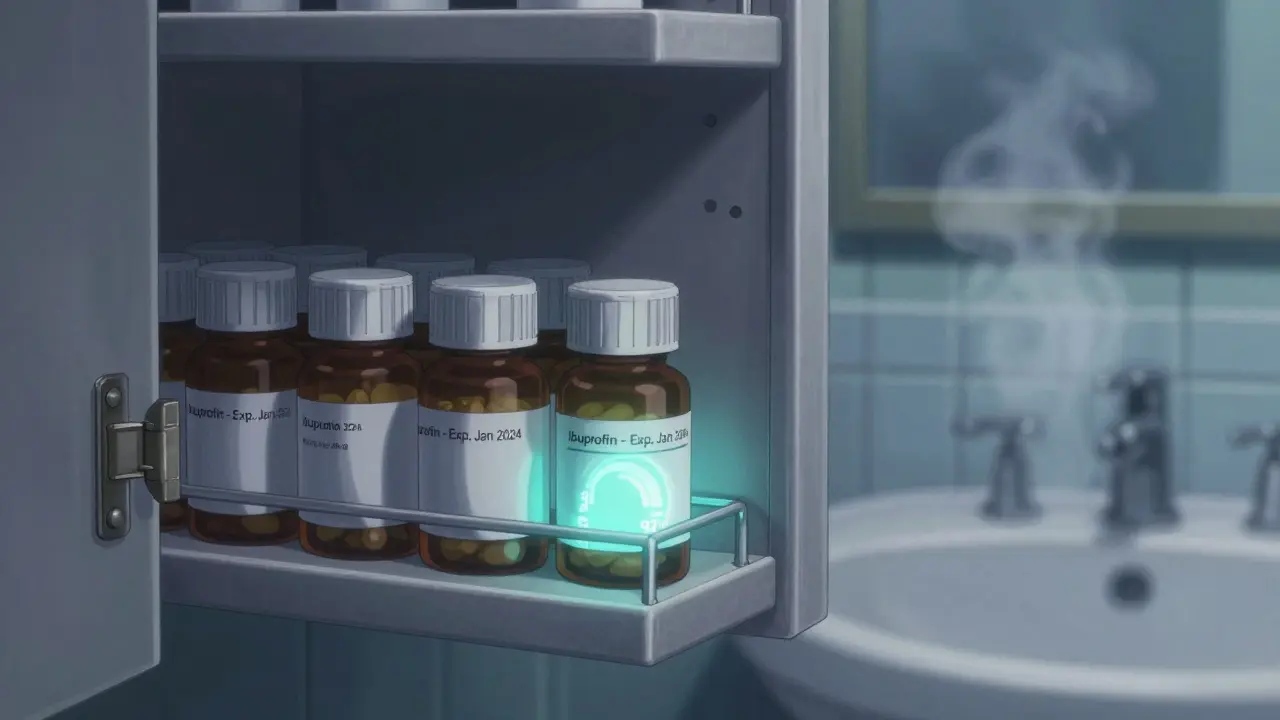
You open your medicine cabinet and find a bottle of ibuprofen from two years ago. The label says it expires in January 2024. Should you take it? Is it dangerous? Or are you just throwing away perfectly good medicine? These questions come up more often than you think. And the answer isn’t as simple as "never use expired meds."
What an Expiration Date Actually Means
The expiration date on your medicine isn’t a "use-by" date like milk. It’s not when the drug suddenly turns toxic. It’s the last day the manufacturer guarantees the medicine will work as intended-meaning it still has at least 90% of its labeled potency and hasn’t developed harmful impurities. This date comes from stability testing done under strict conditions: 25°C (77°F) and 60% humidity. The FDA has required these tests since 1979, and they follow international standards set by the ICH.
Manufacturers don’t guess this date. They test samples over time, sometimes for years, under controlled heat, light, and moisture. Then they add a safety buffer. So if a drug stays stable for 36 months in testing, the label might say 24 months. That’s not being overly cautious-it’s protecting you.
Most Expired Medicines Are Still Safe-But Not All
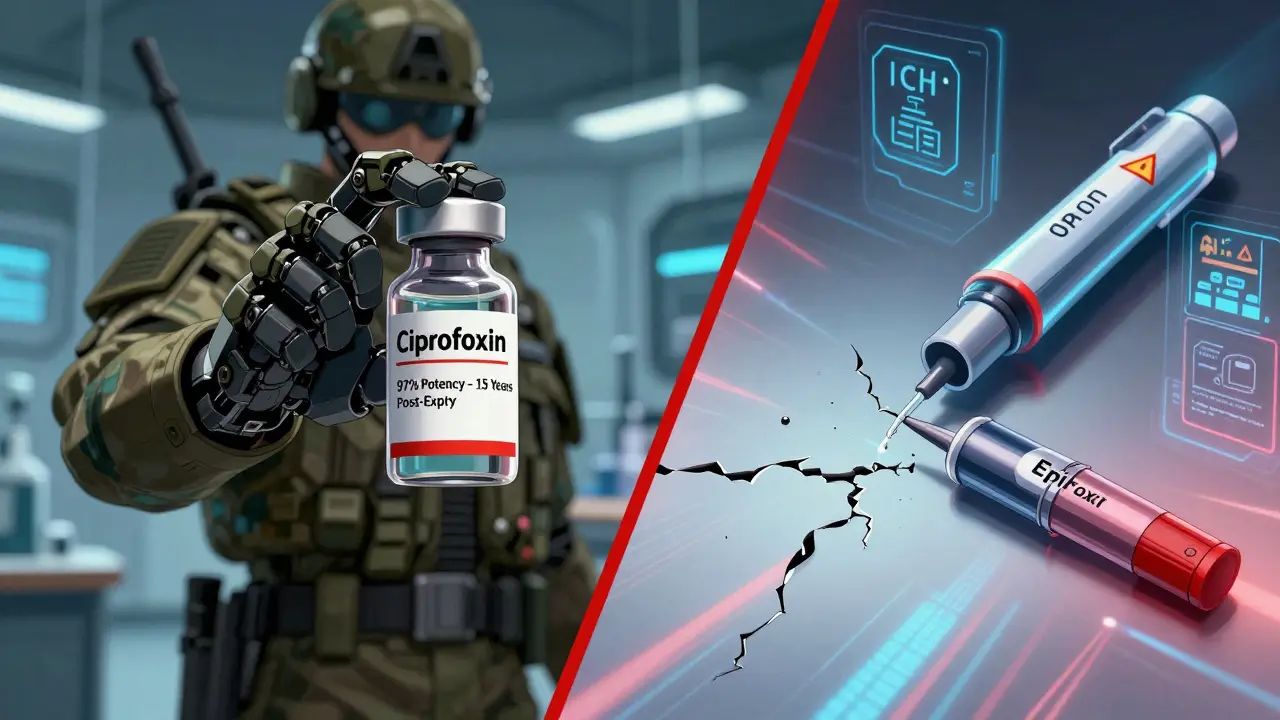
Here’s the surprising part: a lot of expired drugs still work. The U.S. military ran the Shelf Life Extension Program (SLEP) from 1985 to 2006. They tested over 3,000 lots of 122 different medications. About 88% were still effective 15 years past their expiration date. Some, like ciprofloxacin and amoxicillin, held 94-97% potency even after a decade or more.
That doesn’t mean you should stockpile antibiotics for a zombie apocalypse. But it does mean that for many common pills-like statins, antidepressants, or blood pressure meds-being a few months or even a year past the date isn’t likely to hurt you… if they’ve been stored right.
But here’s where it gets dangerous. Some drugs degrade fast-and fast degradation means real risk.
- Nitroglycerin: Used for heart attacks. Loses half its strength within 3-6 months after opening-even before expiration. An expired nitro tablet might not save your life.
- Insulin: If left unrefrigerated or exposed to heat, it breaks down. A degraded dose could mean dangerously high blood sugar.
- Liquid antibiotics: Like amoxicillin-clavulanate. Once mixed, they expire in 14 days. After that, they don’t kill bacteria-they might just make you sicker.
- EpiPens: These save lives during allergic reactions. After expiration, they lose 15-20% potency per year. That could mean not enough epinephrine to stop anaphylaxis.
- Warfarin: An anticoagulant. Even small changes in potency can lead to dangerous bleeding or clots.
These aren’t edge cases. They’re critical medications. Using expired versions isn’t just ineffective-it’s risky.
Storage Matters More Than You Think
Expiration dates assume perfect storage. Real life? Not so much.
Where do most people keep their medicine? The bathroom. Bad idea. Humidity from showers can reach 75-85%. That’s worse than the lab conditions used to test expiration dates. Moisture causes tablets to break down, capsules to stick, and liquids to grow mold.
Heat is another killer. If your medicine sits in a hot car, on a windowsill, or in an unairconditioned attic, it degrades 40-60% faster than if stored at room temperature. A study from the European Medicines Agency confirmed this: drugs stored at 30°C (86°F) lose potency much quicker than those kept at 25°C (77°F).
Keep pills in their original bottles with the child-resistant cap sealed. Don’t transfer them to pill organizers unless you’re using them within a week. Store them in a cool, dry place-like a bedroom drawer, not above the fridge or next to the sink.
When It’s Okay to Use Expired Medicine
Let’s be clear: the FDA says don’t use expired drugs. And for good reason. They can’t control how you store them. They can’t know if you’ve kept your insulin in a backpack in July.
But experts are starting to say: it’s not always black and white.
Dr. Joel Davis from Johns Hopkins says that for stable, chronic conditions-like high blood pressure or cholesterol-some expired pills might be fine for short-term use during shortages, if they look normal and were stored properly. He’s not telling you to do it. He’s saying the science doesn’t always match the warning label.
Here’s a practical rule: if the medicine is a solid tablet or capsule, stored in a cool, dry place, and shows no visible changes-no discoloration, no smell, no crumbling-it’s *probably* still safe for non-critical use. Think: occasional painkillers, antihistamines, or acid reflux meds.
But never use expired medicine for:
- Life-threatening conditions (heart disease, seizures, infections)
- Emergency treatments (EpiPens, nitroglycerin)
- Children, pregnant people, or the elderly
- Anything that looks, smells, or feels wrong
What to Do With Expired Medicines
Don’t flush them unless they’re on the FDA’s Flush List-like fentanyl patches or oxycodone tablets. Flushing pollutes waterways.
Don’t throw them in the trash either. Someone could dig them out. Or they could leach into soil.
The best option? Take them to a drug take-back program. In 2023, DEA collection sites pulled in over 900,000 pounds of unused meds. Events are held twice a year-April and October. Many pharmacies also have drop boxes.
If you can’t get to a drop-off, mix pills with coffee grounds or cat litter, seal them in a bag, and throw them in the trash. It’s not perfect, but it’s safer than leaving them in the cabinet.
The Bigger Picture: Waste, Cost, and Change
Every year, Americans throw away $765 billion worth of medicine because it’s expired. That’s 13-15% of total drug spending. The military saves $1.2 billion a year by extending expiration dates on stockpiled drugs-because they test them.
Now, new tech is emerging. Smart packaging with time-temperature sensors can show if a drug was exposed to heat. Some pharmacies now use $25-$150 monitors to track storage conditions. The FDA is testing Bluetooth sensors on insulin to update expiration dates based on real-world use.
And research is moving fast. A University of Utah study used machine learning to predict remaining potency with 89.7% accuracy. That could one day let you scan a pill bottle and see: "This aspirin still has 92% potency. Safe to use."
But until then? Stick to the label. When in doubt, throw it out-or ask your pharmacist.
What Pharmacists Know That You Don’t
Pharmacists don’t just fill prescriptions. They manage expiration dates daily. In 92% of U.S. community pharmacies, they apply "beyond-use" dates-often shorter than the manufacturer’s date. For example:
- Solid pills: 1 year from dispensing
- Eye drops: 30 days
- Reconstituted antibiotics: 14 days
They do this because once you open the bottle, you’re no longer in the lab. You’re in a humid bathroom. You might leave it on the counter. You might forget it in your purse.
So if you’re unsure whether your medicine is still good, ask your pharmacist. They can tell you if it’s a low-risk pill or something that could be dangerous.
Is it dangerous to take expired medicine?
It depends. For most solid pills stored properly-like ibuprofen, statins, or antihistamines-it’s unlikely to be harmful, though potency may be reduced. But for critical drugs like insulin, EpiPens, nitroglycerin, or liquid antibiotics, expired versions can be dangerous or even life-threatening. Never use expired versions of emergency or life-sustaining medications.
How long after expiration can you still use medicine?
There’s no universal answer. The military’s SLEP study found 88% of drugs remained effective 15+ years past expiration when stored correctly. But that doesn’t apply to everyone. For stable, non-critical meds stored in cool, dry places, a few extra months may be okay. For anything sensitive-like insulin or antibiotics-don’t risk it. Always check with a pharmacist.
Why do expiration dates seem so short?
Manufacturers set expiration dates conservatively based on stability testing under ideal conditions. They add a safety buffer to account for real-world storage. Also, legal and liability concerns push them to use shorter dates. A 2-year date is safer for the company than a 5-year one-even if the drug could last longer.
Can you tell if medicine has gone bad?
Yes. Look for changes: tablets that are discolored (white turning yellow), cracked, or crumbling. Capsules that are sticky or leaking. Liquids that are cloudy, smelly, or have particles. If anything looks or smells off, throw it out-even if it’s before the expiration date.
Should I keep old medicine "just in case"?
Only if it’s a low-risk, stable medication like ibuprofen or allergy pills-and you’re sure it’s stored properly. For anything critical-antibiotics, heart meds, insulin-don’t. Rely on your doctor and pharmacist. Stockpiling expired meds creates a false sense of security and can lead to dangerous decisions in emergencies.
Final Thought: Trust the Label, But Know the Exceptions
The expiration date is there for a reason. It’s not just a marketing tactic. It’s science. But science also shows that many drugs last longer than we think-if stored right.
So don’t panic every time you find an old pill bottle. But don’t ignore it either. Use your judgment. When it’s something you can’t afford to fail-like an EpiPen or insulin-never gamble. When it’s a pain reliever you’ve kept in a cool drawer? Maybe it’s still fine.
When in doubt? Ask your pharmacist. They’re trained to know what’s safe and what’s not. And if you’re ever unsure-throw it out. Your safety isn’t worth the risk.
14 Comments
Takeysha Turnquest
I took expired ibuprofen last week and my headache vanished like it was never there
maybe the label is just corporate fear-mongering
we’ve been conditioned to throw things out instead of using them
Jedidiah Massey
The pharmacokinetic stability profiles of solid-dose formulations under accelerated aging conditions (ICH Q1A(R2)) demonstrate that degradation kinetics are often non-linear and highly dependent on microenvironmental RH and T°
Most consumers store meds in bathrooms like it’s a sauna 🤦♂️
Alex Curran
The SLEP data is fascinating but don't forget the difference between military-grade sealed storage and your bathroom cabinet
Also liquid antibiotics are a hard no after expiration
Been a pharmacist for 12 years and I’ve seen the aftermath
Lynsey Tyson
I used to panic about expired meds until I started asking my pharmacist
Turns out most pills are fine if they look right and aren’t for emergencies
Just don’t be lazy about storage
Edington Renwick
People treat expiration dates like they’re suggestions
Meanwhile, someone’s kid is in the ER because mom gave them expired amoxicillin
Stop being reckless
Allison Pannabekcer
I think we need to stop villainizing people who use expired meds and start fixing the system
Why do we pay so much for pills that expire in 12 months?
Why can’t we have better labeling or smart packaging?
It’s not about being reckless-it’s about being trapped by cost and convenience
Sarah McQuillan
America throws away billions in meds while other countries ration
Meanwhile the FDA pushes fear to protect pharma profits
My grandma in India takes meds 5 years past date and she’s still hiking
Maybe we’re the ones who are broken
Kitt Eliz
OMG YES 🙌
Storage is EVERYTHING
I keep all my meds in a sealed glass jar in my closet with silica packs
My insulin? Refrigerated + date-stamped
Don’t be a statistic 🚫🌡️💧
Aboobakar Muhammedali
I live in a place where medicine is expensive and hard to get
I take expired pills because I have no choice
It’s not about being brave
It’s about surviving
anthony funes gomez
The expiration date is a statistical construct-derived from accelerated stability testing under ICH guidelines-yet it is interpreted by the lay public as a binary on/off switch for safety and efficacy
Which is… profoundly irrational
Laura Hamill
They’re lying to us
Pharma companies make more money if you buy new pills every year
They know the drugs last longer
They just don’t want you to know
That’s why they use scary labels
Alana Koerts
This article is just pharma propaganda wrapped in science
They want you scared so you buy more
Meanwhile the real issue is that healthcare is broken
And you’re blaming the patient for using expired pills
Dikshita Mehta
I always check with my pharmacist before using anything past date
They can tell you if it’s a low-risk pill or something dangerous
It’s free advice and it saves lives
pascal pantel
The military study is meaningless because it’s controlled lab conditions
Real people store meds in hot cars and humid bathrooms
So no, your expired ibuprofen isn’t fine
And your ‘maybe it’s okay’ attitude is why people die