
For millions of people, statins are a daily pill that keeps heart attacks and strokes at bay. But for others, that same pill brings aching legs, tired muscles, and sleepless nights wondering if the benefits are worth it. If you’ve been prescribed a statin-or are thinking about it-you’re probably weighing two things: how much it lowers your cholesterol and whether the muscle pain is real, or just in your head.
How Statins Actually Work
Statins don’t just "lower cholesterol" like a magic bullet. They target the liver, where about 75% of your body’s cholesterol is made. By blocking an enzyme called HMG-CoA reductase, statins cut the liver’s ability to produce cholesterol. That forces the liver to pull more LDL (the "bad" cholesterol) out of your bloodstream to use as raw material. The result? LDL levels drop by 30% to 60%, depending on the drug and dose.That drop isn’t just a number on a lab report. In major studies like the Heart Protection Study and 4S trial, people taking statins saw a 30% reduction in heart attacks and strokes. For someone with existing heart disease or high risk, that means one fewer event for every 20 to 50 people treated over five years. The bigger your baseline risk, the more you stand to gain.
But statins do more than just lower LDL. They calm inflammation in blood vessel walls, stabilize plaque so it’s less likely to rupture, and improve how the lining of arteries functions. These "pleiotropic" effects happen even before LDL drops significantly. That’s why some people feel better within weeks-even if their cholesterol hasn’t changed much yet.
The Real Risk: Muscle Pain and Weakness
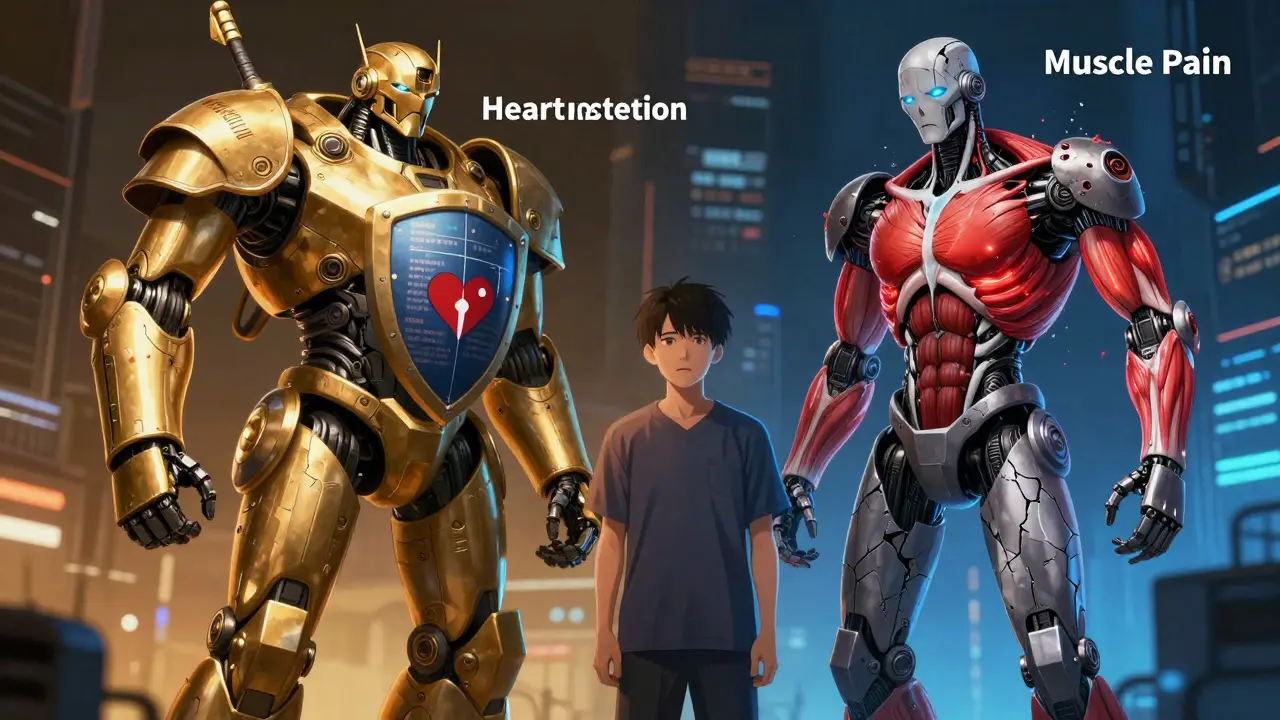
If you’ve heard people say statins cause muscle pain, you’re not imagining things. About 5% to 10% of people on statins report muscle aches, stiffness, or weakness. For some, it’s mild-just soreness after walking. For others, it’s severe enough to stop them from climbing stairs or lifting groceries.The scary part? Rhabdomyolysis-the rare but dangerous breakdown of muscle tissue-is extremely uncommon. It affects fewer than 1 in 10,000 people per year. But muscle pain? That’s real, frequent, and often dismissed by doctors who say, "It’s probably just aging."
Here’s what most people don’t know: not all statins are equal when it comes to muscle side effects. Simvastatin and lovastatin are more likely to cause problems, especially at higher doses. Atorvastatin and rosuvastatin are stronger at lowering cholesterol but still carry risk. Pravastatin and fluvastatin tend to be gentler on muscles. That’s why many doctors will switch you from simvastatin to pravastatin if you start feeling achy.
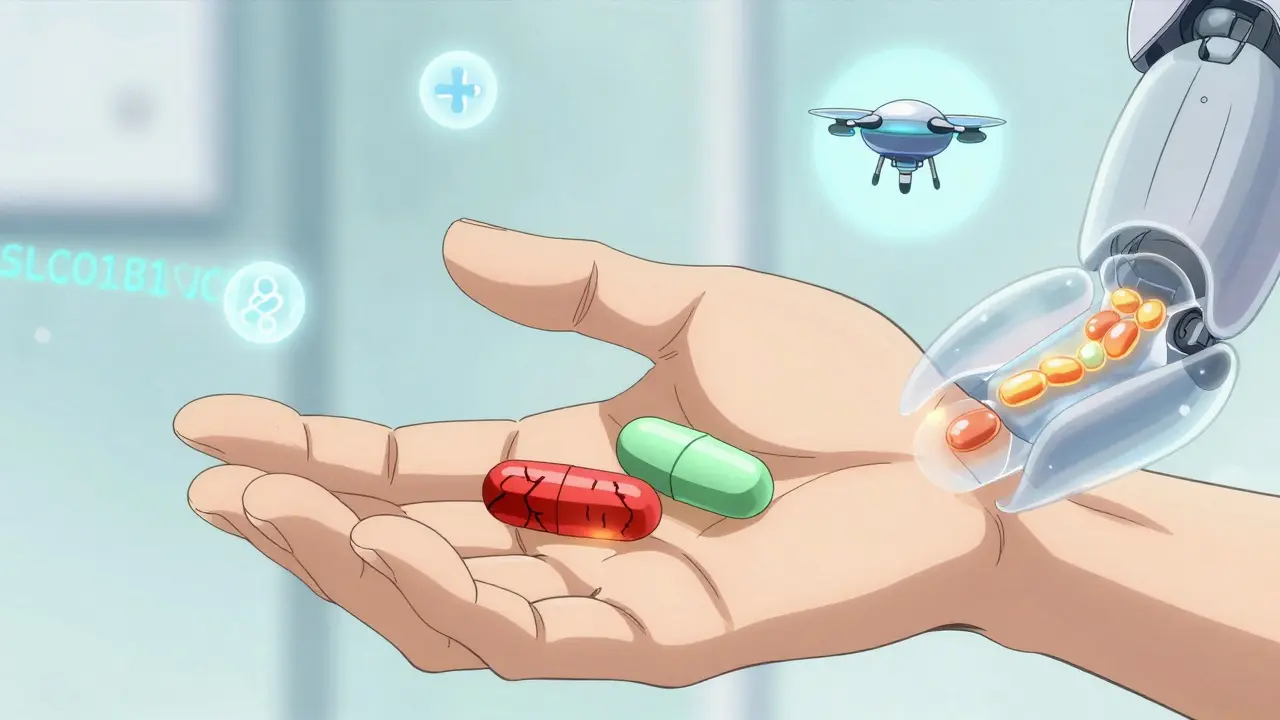
Why does this happen? Statins interfere with the production of coenzyme Q10, a compound your muscles need for energy. They also affect proteins involved in muscle repair. Some people have a genetic variation (SLCO1B1) that makes them more sensitive to muscle damage from certain statins, especially simvastatin. Testing for this isn’t routine-but if you’ve had bad reactions before, it’s worth asking about.
What Does the Evidence Say About Muscle Pain?
There’s a big gap between what doctors think and what patients report. One study found that 90% of patients who stopped statins because of muscle pain didn’t actually have elevated muscle enzymes (CK levels). That means their pain wasn’t "biochemically confirmed"-but it was still real.Here’s the twist: in placebo-controlled trials, people taking dummy pills reported muscle pain just as often as those on statins. That suggests some of the pain might be psychological-fear of side effects, or attributing normal aches to the new pill. But that doesn’t mean the pain isn’t valid. If you feel worse after starting a statin, it matters. Your experience isn’t "all in your head." It’s your body telling you something.
Doctors often say, "Try it for a few weeks-it might go away." Sometimes it does. But if the pain sticks around after 4 to 6 weeks, don’t just tough it out. Talk to your doctor. There are options.
What to Do If You Have Muscle Pain
If you’re experiencing muscle discomfort, here’s what actually works:- Don’t stop cold turkey. Stopping statins suddenly can raise your risk of a heart event. Work with your doctor.
- Switch statins. Try switching from simvastatin to pravastatin or fluvastatin. Many people find relief without losing cholesterol control.
- Lower the dose. Sometimes half a pill works just as well for your risk level. High-dose statins aren’t always needed.
- Try coenzyme Q10. Some people report less pain after taking 100-200 mg daily. Evidence is mixed, but it’s low-risk and worth a trial.
- Check for other causes. Thyroid issues, vitamin D deficiency, or even dehydration can mimic statin muscle pain. Get tested.
One patient I know, a 62-year-old teacher from Leeds, switched from atorvastatin to rosuvastatin after severe leg cramps. No improvement. Then she tried pravastatin at half the dose. Within two weeks, her pain was gone. Her LDL stayed at 1.8 mmol/L-well below the target. She’s been on it for three years now.
Who Should Be on Statins?
Not everyone needs them. The guidelines are clear: statins are recommended if you:- Have already had a heart attack or stroke
- Have diabetes and are over 40
- Have very high LDL (over 4.9 mmol/L)
- Have a 10-year risk of heart disease over 10% (calculated using tools like QRISK3 in the UK)
If you’re healthy, with normal cholesterol and no other risk factors, statins won’t help much-and the side effect risk might outweigh the benefit. That’s why doctors should never prescribe them just because your LDL is "a little high." Risk matters more than numbers.
Cost, Availability, and Real-World Use
The good news? Most statins are cheap. Generic atorvastatin costs as little as £4 a month in the UK. Rosuvastatin and simvastatin are similarly affordable. You don’t need the brand-name Lipitor or Crestor.Still, about half of people stop taking statins within a year. The main reason? Side effects. Not because they don’t work-they do. But because the discomfort feels worse than the distant threat of a heart attack.
That’s why follow-up matters. Your doctor should check in after 6 to 12 weeks. Ask: "Is this pill helping me feel better? Or just making me ache?" If it’s the latter, there’s almost always another option.
What’s Next for Statins?
Researchers are working on smarter versions-drugs that keep the heart-protecting effects but skip the muscle damage. Early studies suggest it’s possible. For now, the best approach is personalized: find the lowest effective dose, the gentlest statin, and keep monitoring.There’s no one-size-fits-all answer. Some people take statins for decades with zero issues. Others can’t tolerate even the smallest dose. Neither outcome means you did something wrong. It just means your body responds differently.
The goal isn’t to avoid statins at all costs. It’s to use them wisely-when the benefit clearly outweighs the risk. And if you’re struggling with side effects, you’re not alone. There are alternatives, adjustments, and solutions. You just need to speak up.
Do statins really reduce heart attacks and strokes?
Yes. Large studies show statins reduce major cardiovascular events by about 30% in people with high risk. For every 1 mmol/L drop in LDL cholesterol, there’s a 22% lower risk of heart attack or stroke. The benefit is strongest for those with existing heart disease, diabetes, or very high cholesterol.
Is muscle pain from statins real or just in my head?
It’s real-even if blood tests don’t show muscle damage. Around 5% to 10% of users report muscle aches, and many feel better after switching statins or lowering the dose. While some pain may be psychological, dismissing it as "all in your head" ignores patient experience. Your symptoms matter.
Which statin causes the least muscle pain?
Pravastatin and fluvastatin are generally associated with fewer muscle side effects compared to simvastatin or atorvastatin. Rosuvastatin is potent but can still cause issues. If you have muscle pain, switching to pravastatin is often the first step doctors recommend.
Can I take coenzyme Q10 with statins?
Yes, and many people do. Coenzyme Q10 levels drop when you take statins, and some studies suggest supplementing with 100-200 mg daily may reduce muscle pain. It’s not a guaranteed fix, but it’s safe and worth trying if you’re having side effects.
Should I stop statins if I have muscle pain?
Don’t stop without talking to your doctor. Stopping suddenly can increase your risk of heart events. Instead, ask about switching statins, lowering the dose, or checking for other causes like vitamin D deficiency. Most muscle pain can be managed without quitting statins entirely.
Are generic statins as effective as brand names?
Yes. Generic atorvastatin, simvastatin, and rosuvastatin work exactly the same as the brand versions. They’re held to the same standards by regulatory agencies. The only difference is cost-generics can be as low as £4 per month.
Do I need blood tests while taking statins?
Your doctor should check liver enzymes and creatine kinase (CK) before starting and if you develop muscle pain. Routine monitoring isn’t needed for everyone without symptoms, but if you’re feeling unwell, a simple blood test can rule out serious muscle damage.
Can lifestyle changes replace statins?
For some people with mild risk, diet, exercise, and weight loss can lower cholesterol enough to avoid statins. But for those with high risk-like those with heart disease or diabetes-lifestyle alone usually isn’t enough. Statins are the most effective tool we have to prevent heart events in these groups.
11 Comments
Natasha Sandra
OMG YES THIS!! 😭 I was on simvastatin and my legs felt like lead bricks after walking to the mailbox... switched to pravastatin and it’s like I got my body back 🙌 no more cramps, no more ‘am I dying?’ nights. Also started CoQ10-felt like a miracle worker. Doctors need to stop acting like muscle pain is just ‘aging’ 💅
Rajni Jain
hi there... i read this and cried a little. my mom stopped her statin because of pain and then had a mini stroke. we were so scared. but she switched to pravastatin at half dose and now she walks every morning again. it’s not magic, but it’s possible. you’re not alone. ❤️
Fabio Raphael
Interesting. I’ve been on atorvastatin for 7 years. Zero muscle pain. But I also do yoga, eat clean, and sleep 8 hours. Maybe the real issue isn’t the statin-it’s the sedentary lifestyle everyone’s pretending isn’t a factor? Just saying.
Amy Lesleighter (Wales)
statins work but they’re not the only tool. if you’re tired all the time and your legs hurt maybe check your vit d. mine was 12. took 5000iu for a month and the pain cut in half. statin? still taking it. but now i feel human again. no doctor ever mentioned vit d. weird.
roger dalomba
Wow. A whole article about how to not take a pill that’s been saving lives for 30 years. Groundbreaking. Next up: ‘How to Not Brush Your Teeth and Still Avoid Cavities.’
Nikki Brown
People who blame statins for muscle pain are just weak. My body doesn’t whine. I take my meds and I don’t complain. If you can’t handle a little discomfort, maybe you shouldn’t be trying to live past 60 anyway. 🙄
Becky Baker
Statins are a socialist plot to make Americans dependent on pills. We used to be strong. We used to walk. Now we take a pill for everything. America is falling apart because we stopped being tough.
Peter sullen
It is imperative to underscore that the pleiotropic effects of HMG-CoA reductase inhibition-namely, endothelial function modulation, plaque stabilization, and CRP reduction-constitute a mechanistic cascade that transcends mere LDL-lowering, thereby conferring significant cardiovascular risk mitigation independent of lipid parameters. Furthermore, the incidence of statin-associated muscle symptoms (SAMS) is frequently overestimated due to nocebo effects, as demonstrated in multiple double-blind, placebo-controlled trials.
Sumler Luu
Just wanted to say thank you for writing this. I’ve been too scared to talk to my doctor about my leg pain because I thought I was being dramatic. Now I’m scheduling an appointment to switch statins. You made me feel less alone.
sakshi nagpal
Thank you for the balanced perspective. In India, many patients stop statins because they hear stories from friends. But we also lack access to alternatives. Perhaps doctors should offer a trial of pravastatin first, especially for those with mild risk. Education matters.
Sandeep Jain
my uncle took simva for 2 years and his legs hurt so bad he couldnt get up from chair. switched to prava and now he plays golf. i told him to try coq10 too. he did. no more pain. he said he felt like a new man. thanks for this post.