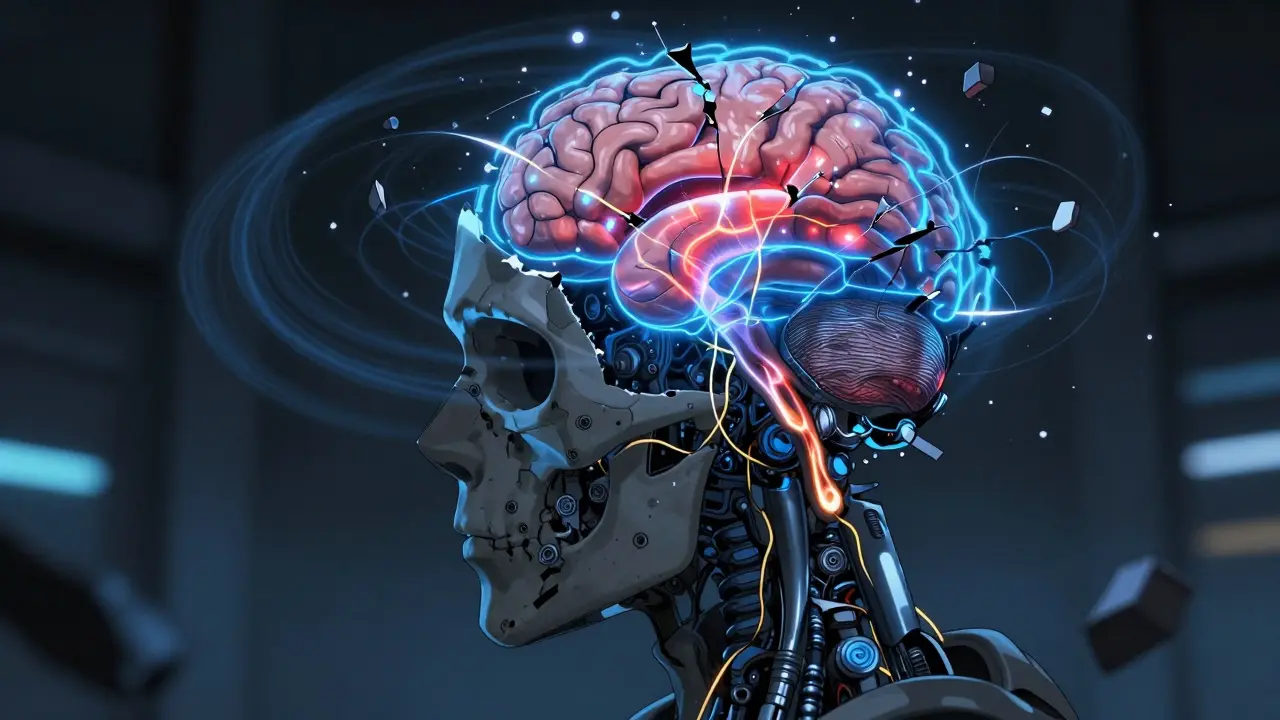
Post-Traumatic Stress Disorder isn’t just about remembering something bad. It’s about your brain getting stuck in a loop where the past feels like it’s still happening. You might have flashbacks, nightmares, or feel constantly on edge-even when you’re safe. And if you’ve tried to just ‘get over it,’ you know that doesn’t work. PTSD is a real, measurable condition, and there are proven ways to treat it: by processing the trauma and, when needed, using medication to ease the symptoms so healing can begin.
What PTSD Actually Does to Your Brain
PTSD isn’t weakness. It’s a neurological response. When someone goes through something life-threatening-combat, assault, a serious accident-the brain’s alarm system goes into overdrive. The amygdala, your fear center, stays loud. The prefrontal cortex, which helps you think clearly and calm down, gets quieter. That’s why you might feel flooded by panic over a loud noise, or shut down when someone asks you to talk about what happened. The DSM-5-TR, the official diagnostic manual used by clinicians in 2025, says PTSD shows up in four ways: intrusive memories (flashbacks, nightmares), avoiding reminders of the trauma, negative changes in how you think or feel (guilt, numbness, detachment), and being overly alert (hypervigilance, trouble sleeping, being easily startled). These symptoms last more than a month and make daily life hard-whether that’s holding a job, parenting, or even leaving the house.First-Line Treatment: Trauma-Focused Therapy
Medication isn’t the first step. In the UK, the NICE guidelines and in the U.S., the VA/DoD Clinical Practice Guideline both say trauma-focused therapy should come first. Why? Because it targets the root issue: how the brain stores and reacts to trauma. Two therapies stand out: Cognitive Processing Therapy (CPT) and Prolonged Exposure (PE). CPT helps you challenge the thoughts that keep you stuck-like “It was my fault” or “The world is completely dangerous.” You write about the trauma and talk through those beliefs with a therapist. PE gently helps you face avoided memories and places-not to retraumatize you, but to show your brain that those triggers aren’t dangerous anymore. You might start by imagining the event, then move to visiting a place you’ve avoided. Studies show CPT leads to 60-70% remission rates. That means symptoms drop so low that most people no longer meet the full PTSD diagnosis. PE works similarly. Both take 8-12 weekly sessions. It’s not quick, but the effects last. Unlike medication, therapy doesn’t need to be taken forever.Medication: What’s Actually Approved-and What’s Used Off-Label
The FDA has approved only two drugs specifically for PTSD: sertraline (Zoloft) and paroxetine (Paxil). Both are SSRIs-selective serotonin reuptake inhibitors. They’ve been around since the late 90s and early 2000s. They don’t erase the trauma, but they help manage the chemical imbalance that makes anxiety and depression worse. In clinical trials, sertraline helps about 53% of people see meaningful symptom reduction. Paroxetine does slightly better at 60%. But here’s the catch: only 20-30% of people achieve full remission on these drugs alone. And side effects are common-nausea, insomnia, sexual dysfunction (low libido, trouble reaching orgasm), and emotional blunting. That last one is a big reason people quit. One Reddit study of 1,243 people with PTSD found 42% stopped SSRIs because of sexual side effects. Other drugs are used off-label because they work for some people. Venlafaxine (Effexor XR), an SNRI, has similar results to SSRIs. Mirtazapine (Remeron) helps with sleep and appetite, which often crash in PTSD. Amitriptyline, an older tricyclic, shows modest benefit but comes with more side effects like dry mouth and dizziness.The Nightmare Solution: Prazosin
If nightmares are your worst symptom, prazosin is a game-changer. It’s not an antidepressant-it’s a blood pressure drug repurposed for PTSD. It blocks adrenaline receptors in the brain, calming the fight-or-flight response during sleep. In VA studies, veterans using prazosin saw a 50% drop in nightmare frequency within four weeks. One veteran in a VA forum said, “I haven’t woken up screaming in 10 years.” It’s rated 4.1 out of 5 by over 850 users. Dosing starts low-1 mg at bedtime-and slowly increases to 15 mg if needed. It’s safe, non-addictive, and works fast. For many, it’s the only thing that lets them sleep again.
Antipsychotics and Other Add-Ons
When someone has severe hyperarousal or rage, doctors sometimes add low-dose antipsychotics like risperidone or quetiapine. These aren’t first-line. They’re for when other treatments fail. Studies show small improvements in flashbacks and irritability, but they come with risks: weight gain, drowsiness, and metabolic changes. The National Center for PTSD says evidence is inconsistent, and most guidelines don’t recommend them unless other options are exhausted.Combining Therapy and Medication
Some experts argue you should do both at once. A 2021 JAMA Psychiatry study found that combining sertraline with Prolonged Exposure led to a 72% response rate-higher than either alone. That’s because medication can take the edge off. If you’re too overwhelmed to sit through a therapy session, SSRIs or prazosin might make it possible. But others, like Dr. Matthew Friedman from the VA’s National Center for PTSD, warn: “Medications treat symptoms but don’t process trauma.” If you rely only on pills, the trauma stays buried. Therapy helps you rewrite the story in your brain. That’s why most guidelines say: start with therapy. Add meds only if symptoms are too severe to engage in therapy.Cost, Time, and Long-Term Outlook
A month’s supply of generic sertraline costs $4-$10 in the U.S. A single therapy session runs $100-$200. At first glance, meds look cheaper. But therapy gives lasting results. Medication often needs to be taken indefinitely. If you stop, 55% relapse within a year, according to the NIMH. The VA now uses a stepped-care model: start with therapy, add meds only if needed. Private practices are slower to adopt this-65% still start with medication. But guidelines are shifting. The 2024 VA/DoD update will include MDMA-assisted psychotherapy as a recommended option after FDA Breakthrough Therapy designation. Early results show 67% remission at 18 weeks-far higher than any drug alone.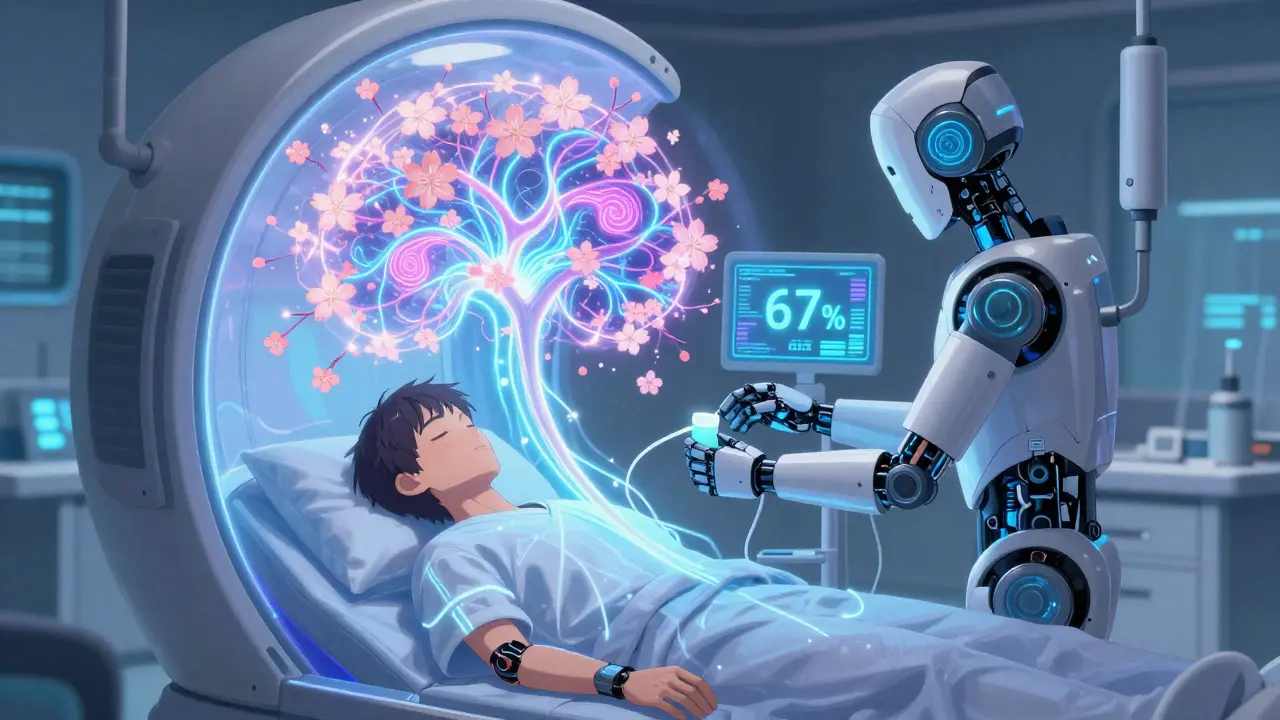
What Works for Whom?
There’s no one-size-fits-all. A combat veteran with nightmares might thrive on prazosin + CPT. A survivor of childhood abuse with chronic numbness might need longer-term therapy and a different SSRI. Someone with severe anxiety and panic attacks might benefit from venlafaxine while waiting for therapy slots. The key is matching the treatment to the symptom. If sleep is broken, try prazosin. If you’re stuck in guilt, try CPT. If you’re too overwhelmed to start therapy, SSRIs can be a bridge.Why Some People Don’t Respond
About 1 in 3 people don’t improve with standard treatments. This isn’t failure-it’s complexity. Some have co-occurring conditions like depression, substance use, or borderline personality disorder. Others have genetic differences that affect how they metabolize SSRIs. The Psychiatric Genomics Consortium has found 95 genetic variants linked to SSRI response. That means future treatment might involve blood tests to predict what drug works best. For now, if three SSRIs and venlafaxine fail, it’s time to go deeper: trauma-focused therapy, prazosin, or newer options like MDMA-assisted therapy (when available).What to Do If You’re Struggling
If you’re in the UK, ask your GP for a referral to an NHS trauma service. If you’re in the U.S., the VA’s PTSD Consultation Program offers free expert advice to any provider-24/7. You don’t need to be a veteran to use it. Start by tracking your symptoms. Use the PTSD Coach app (free, from the VA). It helps you rate your mood, sleep, and triggers. Bring that data to your provider. It’s not about being “bad” at treatment-it’s about finding what fits.Final Thought: Healing Isn’t Linear
PTSD recovery isn’t about getting back to who you were before. It’s about building a life that includes the trauma but isn’t ruled by it. Medication can help you breathe again. Therapy helps you understand why you’re still holding your breath. Together, they don’t erase the past-they give you back your future.Can PTSD be cured with medication alone?
No. Medication can reduce symptoms like anxiety, nightmares, and depression, but it doesn’t help your brain process the trauma. Without therapy, the underlying triggers remain, and symptoms often return after stopping medication. The most effective approach combines therapy to process trauma with medication to manage overwhelming symptoms.
Which antidepressants are best for PTSD?
Sertraline (Zoloft) and paroxetine (Paxil) are the only two FDA-approved for PTSD. Both are SSRIs and work for about half of users. Venlafaxine (Effexor XR), an SNRI, is commonly used off-label and shows similar results. Mirtazapine and amitriptyline are options for those with sleep or appetite issues, but evidence is weaker. The best choice depends on side effect tolerance and other health conditions.
How long does it take for PTSD medication to work?
Most SSRIs take 4-8 weeks to show noticeable improvement, and it can take up to 12 weeks at a full dose to know if they’re working. Prazosin, used for nightmares, often works within days to a week. Doctors usually wait 8-12 weeks before deciding a medication isn’t helping and switching options.
Why do some people stop taking PTSD meds?
Side effects are the main reason. About 31% of users stop within the first few weeks due to nausea, insomnia, or emotional blunting. Sexual side effects-like low libido or inability to orgasm-affect 42% of users, according to a Reddit survey of 1,243 people with PTSD. Some also feel the medication makes them feel numb or disconnected from emotions, which can interfere with therapy progress.
Is therapy really better than medication for PTSD?
Yes, in the long term. Trauma-focused therapies like CPT and PE lead to higher remission rates-60-70%-compared to 50-60% for SSRIs alone. Therapy teaches skills that last after treatment ends. Medication helps manage symptoms but doesn’t change how the brain stores trauma. Guidelines from NICE and the VA recommend therapy as first-line treatment. Medication is best used to support therapy, not replace it.
What’s new in PTSD treatment for 2025?
MDMA-assisted psychotherapy is set to be approved by the FDA in 2025, with phase III trials showing 67% remission rates at 18 weeks. Brexpiprazole (Rexulti), an antipsychotic, is under review for use alongside SSRIs to boost response rates. Genetic testing to predict SSRI effectiveness is moving from research into clinical use. Digital tools like the PTSD Coach app are now integrated into VA care, improving engagement and tracking.
14 Comments
Aditya Kumar
Ugh, another one of these long-ass articles. I read like three sentences and my brain already checked out. PTSD? Yeah, I get it. Just stop being so sensitive and go for a walk. That’s what my uncle did after Vietnam. He didn’t need therapy or pills. Just didn’t talk about it. Worked fine.
Also, why is everyone so obsessed with ‘processing trauma’? Sounds like expensive navel-gazing to me.
Colleen Bigelow
Oh great. Another liberal brainwashing scheme disguised as science. SSRIs? Prazosin? Please. The VA’s been pushing this pharmaceutical agenda since the 90s because Big Pharma owns Congress. Meanwhile, real men used to just suck it up, carry their rifles, and pray. Now we medicate kids who got scared in a warzone? What happened to discipline? To faith? To the American spirit?
And don’t even get me started on MDMA therapy. Next they’ll be giving LSD to veterans and calling it ‘healing.’ This isn’t medicine-it’s social engineering. Wake up, sheeple.
Billy Poling
While I appreciate the comprehensive overview presented herein, I must respectfully submit that the conflation of pharmacological intervention with neurobiological processing remains a critical oversight in contemporary clinical discourse. The amygdala’s hyperactivation, as you rightly note, is not merely a biochemical phenomenon-it is an epistemological rupture in the subject’s temporal ontology. That is to say, the trauma is not stored as a memory but as a persistent ontological state, which SSRIs, by virtue of their serotonergic modulation, cannot resolve, only temporarily attenuate. The true therapeutic paradigm must therefore be dialectical: pharmacological stabilization must precede, not substitute, the hermeneutic reconstruction of autobiographical narrative. Failure to recognize this hierarchical dependency results in the iatrogenic reinforcement of symptom dependency, particularly in populations with comorbid dissociative or attachment-based pathologies.
Furthermore, the omission of neuroplasticity metrics in outcome studies is a glaring methodological flaw. Without fMRI or EEG validation, we are left with subjective symptom scales that may reflect placebo response rather than true neurocognitive reorganization.
Mike Smith
You’re not broken. You’re not weak. You’re not failing. What you’ve been through changed your nervous system-and that’s not your fault.
Therapy isn’t about ‘getting over it.’ It’s about learning how to live with it without letting it own you. And medication? It’s not a crutch-it’s a temporary bridge when the weight is too heavy to walk alone.
One step. One day. One breath. You’re doing better than you think.
Kitty Price
prazosin changed my life 😭 literally slept for the first time in 7 years
thank you for writing this. i needed to see someone say it out loud.
Randolph Rickman
Hey, I’ve been where you are. I did the meds. I did the therapy. I quit both because I thought I was ‘fixed.’ Then I relapsed. Hard.
Here’s the truth: healing isn’t a straight line. Some days you’ll feel like you’re back at square one. That’s normal.
But here’s what’s not normal: thinking you have to do this alone. Talk to someone. Even if it’s just a text to a friend. Even if it’s a 3am post on Reddit. You’re not weird for needing help. You’re human.
And if you’re reading this and you’re scared to start therapy? I get it. I was too. But I found a therapist who didn’t make me feel like a patient. She made me feel like a person. That’s all you need.
You’ve survived 100% of your worst days so far. That’s not luck. That’s strength.
sue spark
i tried zoloft for 3 months and felt like a zombie no emotions no joy just numb
then i started pe therapy and it was like someone turned the volume back on even though it hurt
still crying sometimes but at least i feel something
SHAMSHEER SHAIKH
As a mental health professional with over two decades of clinical experience across three continents, I must emphasize: the convergence of evidence-based psychotherapy and pharmacological support remains the gold standard-not as a compromise, but as a synergistic imperative.
PTSD is not merely a psychological condition; it is a somatic, neurological, and existential wound. Medication alone cannot restore the shattered sense of safety. Nor can therapy alone alleviate the biochemical storm that renders cognitive processing impossible.
Consider this: a veteran who cannot sleep due to nightmares cannot engage in exposure therapy. Prazosin restores the capacity to rest. Rest enables the mind to heal. Healing requires narrative reconstruction. Narrative reconstruction requires safety. Safety is built through consistency, compassion, and, yes-sometimes, pills.
Let us stop the false dichotomy. Let us stop shaming those who need medication. Let us stop glorifying ‘toughing it out.’ The brain is not a muscle. It is a delicate, miraculous organ. Treat it with the reverence it deserves.
James Rayner
I’ve been thinking about this a lot lately…
What if PTSD isn’t something to ‘fix’… but something to carry differently?
The trauma doesn’t disappear. The memories don’t vanish. But maybe the goal isn’t to erase them… but to stop letting them scream.
Medication quiets the noise. Therapy helps you learn how to listen to the quiet.
And maybe… just maybe… that’s enough.
Not perfect. Not healed in the way society wants. But alive. And that’s worth something.
Souhardya Paul
Just wanted to say thank you for mentioning MDMA therapy. I’ve been waiting for this for years. My therapist in Portland said she’s already training for it. I’m 32, and I’ve been in and out of treatment since I was 18. I’m tired of being a ‘non-responder.’
If this works, it’s not magic. It’s justice. We’ve been letting people suffer for decades because the system didn’t want to fund real healing.
Also-can we talk about how weird it is that we give opioids for chronic pain but call SSRIs ‘chemical crutches’ for emotional pain? Double standard much?
Kim Hines
i used to think prazosin was just for vets. then i tried it for my childhood trauma nightmares. same result. 1 mg. slept like a baby. no dreams. no screaming. just silence.
still in therapy. still healing. but now i have nights where i don’t hate my own mind.
Joanna Ebizie
Ugh. So you’re telling me I’m supposed to pay $150/hour to talk about my rape… while some guy gets a $4 pill to sleep? Sounds like capitalism to me.
And why are we still using 20-year-old drugs? Why not just give everyone ketamine and call it a day?
Also, if you’re not a veteran, why should you even get therapy? The VA’s got enough on their plate.
Ron Williams
As someone who grew up in a country where mental health was whispered about like a curse, I want to say this: reading this in English, in the U.S., feels like a miracle.
In South Africa, we still call PTSD ‘weakness of the spirit.’ My cousin, a soldier in the border wars, took his life because he was told to ‘pray harder.’
Thank you for naming the science. For naming the suffering. For not pretending it’s all in the head.
It’s in the body. In the bones. In the silence after the alarm clock rings.
We need more of this. Not just in the U.S. But everywhere.
Josias Ariel Mahlangu
Let me be clear: if you're taking medication for PTSD, you're admitting defeat. Real men don't need chemicals to feel human. They face their demons head-on. They don't run to therapists or pop pills. They endure. They rise. They don't need a government handout to feel worthy.
And as for MDMA? That's just another drug for weaklings who can't handle the truth. You think trauma is healed by hallucinations? That's not healing-that's escapism.
Stop treating PTSD like a medical condition. Treat it like a moral test. Pass it. Or don't. But don't pretend you're doing anything heroic by taking a pill.