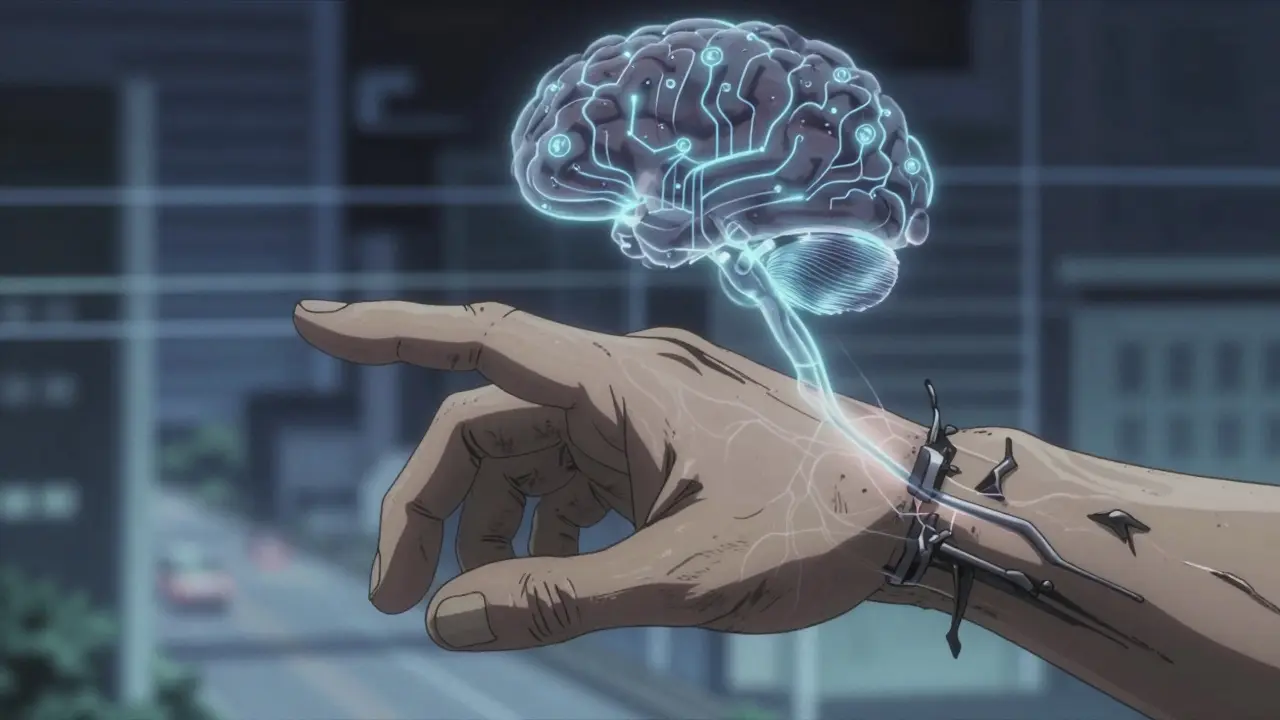
When your hand starts shaking without you meaning it to-like you’re rolling a pill between your thumb and finger-that’s often the first sign of Parkinson’s disease. It’s not just shaking. It’s also stiffness that makes buttoning a shirt feel like lifting weights, and movements that slow down until walking feels like wading through mud. These aren’t normal aging quirks. They’re the result of a quiet, steady loss of dopamine in the brain-a chemical that tells your muscles when and how to move.
What Happens in the Brain with Parkinson’s?
Parkinson’s disease attacks the part of the brain called the substantia nigra, where nerve cells make dopamine. By the time someone starts showing symptoms, they’ve already lost 60 to 80% of those dopamine-producing cells. That’s not a small loss. It’s like losing most of the traffic lights in a city. Cars (your muscles) don’t know when to start, stop, or turn. So they either don’t move at all or move in uncontrolled ways.
This isn’t random. The damage builds slowly over years. That’s why most people are diagnosed after 65, but about 4% get it before 50. The tremor usually starts on one side-maybe just the right hand-then spreads. It’s most noticeable when the hand is resting. Once you reach for a cup, the shaking often stops. That’s why many people don’t realize it’s Parkinson’s until someone else points it out.
The Three Main Motor Symptoms
There are four core motor symptoms of Parkinson’s, but three stand out early on: tremor, stiffness, and slowness. The fourth-trouble with balance-comes later.
Tremor affects about 80% of people with Parkinson’s. It’s not a constant shake. It’s rhythmic, slow, and usually starts in one hand. The classic ‘pill-rolling’ tremor looks like you’re rolling a tiny object between your thumb and index finger. Stress, fatigue, or strong emotions make it worse. It fades when you’re asleep or actively moving.
Stiffness (called rigidity) happens in nearly everyone with Parkinson’s. It’s not just tight muscles. It’s a constant resistance when someone tries to move your arm or leg. Doctors describe it as either ‘lead-pipe’-smooth and constant-or ‘cogwheel’-a jerky, ratchet-like feel. This stiffness makes everyday tasks painful and hard. Writing becomes shaky, buttons won’t go through loops, and tying shoelaces? Forget it. About 73% of people report major trouble with fine motor tasks within three years of diagnosis.
Slowness (bradykinesia) is the most disabling symptom for many. It’s not laziness. Your brain just doesn’t send the signal fast enough. Getting out of a chair takes effort. Walking becomes shuffling. Your face loses expression. You blink less. Your voice gets softer. This is often the symptom that makes people realize something’s wrong-not because they’re shaking, but because they’re just… slower.
Why Dopamine Replacement Is the Cornerstone of Treatment
There’s no cure for Parkinson’s. But there is a way to fix the symptom problem: replace the missing dopamine. That’s where levodopa comes in.
Levodopa isn’t dopamine itself. It’s a chemical your brain can turn into dopamine. The problem? If you take it alone, your body converts it into dopamine before it even reaches the brain-causing nausea, low blood pressure, and other side effects. So it’s always paired with carbidopa, which blocks that early conversion. Together, they’re called carbidopa/levodopa.
This combo, first approved in 1970, still works better than anything else. About 75% of people see big improvements in movement within 30 to 60 minutes of taking it. For many, it’s life-changing. They can walk again. Write again. Hold a grandchild’s hand.
The Downsides of Long-Term Use
But here’s the catch: the magic doesn’t last forever.
After 5 to 10 years, about half of people on levodopa start having problems. One is ‘wearing-off’-the medicine works for two hours, then fades before the next dose. Then there’s ‘on-off’ fluctuations-sudden, unpredictable switches between being able to move and being frozen. And then there’s dyskinesia: involuntary, dance-like movements that happen when the drug peaks.
These aren’t side effects you can ignore. They’re often more disruptive than the original tremor. One patient on a Parkinson’s forum wrote: ‘After eight years, my ‘on’ time dropped from six hours to two or three per dose. The dyskinesias are worse than the shaking ever was.’
That’s why doctors now take a ‘start low, go slow’ approach. Instead of jumping to high doses, they begin with 25/100 mg once or twice a day. They watch how the body reacts. They wait. They adjust. This reduces early dyskinesia risk.
Alternatives to Levodopa
Not everyone starts with levodopa. For younger patients, or those with milder symptoms, doctors sometimes begin with dopamine agonists like pramipexole or ropinirole. These drugs mimic dopamine by binding directly to its receptors.
They’re less powerful-only 30 to 50% as effective as levodopa-but they carry a lower risk of early dyskinesia. One patient shared: ‘Starting pramipexole at diagnosis kept me steady for five years with almost no side effects.’
But they come with their own problems: dizziness, sleepiness, impulse control issues (like gambling or overeating), and hallucinations in older adults. That’s why many people end up switching to levodopa later-or combining both.
By the time Parkinson’s has been around for a few years, 60% of patients are on a mix of levodopa and a dopamine agonist. It’s not about choosing one over the other. It’s about balancing what works now with what might work tomorrow.
Timing, Food, and the Protein Problem
Levodopa doesn’t just need the right dose. It needs the right timing.
Protein interferes with its absorption. High-protein meals-meat, eggs, cheese, beans-can block levodopa from entering the brain. That’s why many patients are told to take their medication 30 to 60 minutes before eating. Some even shift their protein intake to dinner so they can take their morning and afternoon doses on an empty stomach.
And then there’s the sheer complexity of the schedule. Early on, you might take it three times a day. Later, it’s five or six. Each dose has to be timed just right. A 2023 survey found that 56% of patients say managing medication timing is their biggest daily challenge. And 72% say ‘wearing-off’ episodes ruin their ability to do routine things-like getting dressed, cooking, or even talking on the phone.
On average, people spend 15 minutes a day managing meds early on. By moderate stages, that jumps to 45 minutes. And 78% need help from a caregiver to get it right.
Newer Options and What’s Coming
There’s progress beyond pills.
In 2018, the FDA approved Inbrija, an inhaled form of levodopa. It works in 10 minutes and is meant for sudden ‘off’ episodes. But it costs $3,700 a month-far more than generic pills.
Then there’s Rytary, an extended-release capsule that lasts longer. You take it twice a day instead of three or four. But it costs about $5,800 a year-almost 10 times more than the generic.
And in research labs, scientists are testing continuous dopamine delivery through tiny pumps under the skin. A 2022 trial showed it added 2.5 extra ‘on’ hours per day compared to oral pills. Gene therapies are also being tested-trying to make the brain produce its own dopamine again. But these are still experimental.
Meanwhile, the Michael J. Fox Foundation is funding research to find biomarkers-biological signals-that can predict who will respond best to which drug. Early data suggests genes like COMT and MAO-B might help doctors choose the right treatment before the first pill is even taken.
It’s Not Just About Medicine
Medication keeps you moving, but it doesn’t fix everything. Physical therapy, speech therapy, and regular exercise are just as important. Walking, tai chi, and dancing have been shown to improve balance and coordination. Some people report better mobility after physical therapy than after a new drug dose.
And the emotional toll? It’s huge. Depression and anxiety are common. Isolation creeps in. That’s why support groups matter. People need to talk to others who get it.
Right now, Parkinson’s affects 10 million people worldwide. By 2040, that number will double. The economic cost in the U.S. alone is over $22,800 per person per year-half of it from lost productivity and caregiving.
There’s no cure. But there’s control. And with smarter dosing, better timing, and new delivery methods, many people are living full, active lives-even decades after diagnosis.
Is tremor always the first sign of Parkinson’s disease?
No. While tremor is the most recognizable symptom, about 20% of people with Parkinson’s don’t have it at all. For them, stiffness, slowness, or balance problems come first. Some notice they’re dragging a foot, their handwriting is shrinking, or their voice sounds quieter. These can be early clues, too.
Does levodopa cure Parkinson’s disease?
No. Levodopa replaces dopamine and helps control symptoms, but it doesn’t stop the brain cells from dying. It’s like putting gas in a car with a leaking tank-you keep refilling, but the leak doesn’t stop. That’s why symptoms eventually return or change, and why long-term use brings new challenges like dyskinesia.
Why do dopamine agonists have fewer motor side effects than levodopa?
Levodopa is converted into dopamine in the brain, which causes wild spikes and dips in dopamine levels. Dopamine agonists work more steadily by directly stimulating receptors, avoiding those peaks. This smoother action reduces the risk of early dyskinesia and wearing-off. But they’re less powerful and can cause other side effects like sleepiness or impulse control issues.
Can you stop taking Parkinson’s medication if symptoms improve?
No. Parkinson’s is a progressive disease. Stopping medication doesn’t reset the brain-it just lets symptoms return, often worse than before. Even if you feel great, stopping meds can lead to severe stiffness, freezing, or even a dangerous condition called neuroleptic malignant syndrome. Always consult your doctor before making any changes.
How do you know if your dopamine replacement therapy isn’t working anymore?
Signs include shorter ‘on’ times (less than 2-3 hours per dose), sudden ‘off’ episodes without warning, increased stiffness or freezing, and new involuntary movements (dyskinesia) that weren’t there before. If you’re spending more time not moving than moving, it’s time to talk to your neurologist about adjusting your plan.
Is it true that protein interferes with levodopa?
Yes. Large amounts of protein compete with levodopa for absorption in the gut and transport across the blood-brain barrier. A steak or a big bowl of beans can make your morning dose ineffective. Many patients solve this by taking levodopa 30-60 minutes before meals or saving protein-heavy foods for dinner.
What’s the biggest mistake people make with Parkinson’s medication?
Waiting too long to start treatment-or taking too much too soon. Delaying levodopa doesn’t slow the disease, but rushing into high doses can cause early dyskinesia. The best approach is starting low, going slow, and adjusting based on real-life function, not just how you feel on a given day.
Managing Parkinson’s isn’t about finding one magic pill. It’s about building a daily rhythm-medication timed right, meals planned around it, movement kept active, and support never far away. The goal isn’t perfection. It’s enough good days to live well.
10 Comments
Jon Paramore
Levodopa’s pharmacokinetics are notoriously nonlinear due to competitive amino acid transport at the BBB. The protein interference isn’t just a nuisance-it’s a kinetic blockade. That’s why timed dosing and low-protein breakfasts are non-negotiable in clinical practice. Miss the window, and you’re chasing motor fluctuations for the rest of the day.
Grace Rehman
So we replace a chemical to fix a symptom that’s caused by the body killing its own cells... and we call that progress? We’re just patching a sinking ship with duct tape and hope. Maybe instead of chasing dopamine like it’s the holy grail, we should ask why the brain is turning on itself in the first place
Siobhan K.
Grace has a point but let’s not throw the baby out with the bathwater. Levodopa still gives people back their lives-even if it’s temporary. The real failure isn’t the drug, it’s the system that makes Inbrija cost $3700/month while generics sit on shelves. We treat symptoms like they’re optional luxuries
Brian Furnell
Wait-so if dopamine agonists cause impulse control issues like gambling or hypersexuality… and levodopa causes dyskinesia… and protein blocks absorption… and timing is everything… and you need a caregiver to manage it all… then why are we still acting like this is just a ‘medication management issue’? This is a full-system failure. We’re asking patients to be pharmacologists, nutritionists, and therapists on top of living with a degenerative disease. It’s not fair. It’s not sustainable. And we’re not talking about it enough.
Meina Taiwo
Protein blocks levodopa. Take it 30 min before meals. Simple.
Adrian Thompson
They don’t want you to know this but dopamine replacement is just a distraction. The real cause? Glyphosate in your food. The CDC knows. Big Pharma knows. That’s why they push pills instead of fixing the food supply. You think this is science? It’s profit. Wake up.
Southern NH Pagan Pride
Levodopa is a temporary fix but the real issue is the neurotoxins in vaccines and fluoridated water… they’re poisoning the substantia nigra… and no one talks about it because the pharma lobby owns the FDA… I’ve been researching this for 12 years and the truth is buried under layers of lies…
Jackie Be
I just got my 8th dose today and I can finally hug my grandkids again and I swear to god if anyone tells me to just ‘exercise more’ I’m gonna scream I’ve been walking 3 miles a day since diagnosis and it’s the meds that let me stand up at all
Swapneel Mehta
My uncle had PD for 17 years. He started on pramipexole, switched to levodopa after 6 years, now uses Inbrija for sudden offs. He still gardens, drives, and jokes with his grandkids. It’s not perfect-but it’s enough. Progress isn’t a cure. It’s more good days than bad.
Dan Adkins
It is imperative to underscore that the current therapeutic paradigm, while clinically efficacious in the short term, is fundamentally inadequate in addressing the neurodegenerative etiology of Parkinson’s disease. The administration of exogenous dopaminergic agents constitutes a palliative intervention, not a curative one, and the resultant dyskinesias represent iatrogenic complications arising from pharmacological overcompensation. One must therefore advocate for a paradigm shift toward neuroprotective and regenerative modalities, as the prevailing model is both unsustainable and ethically questionable in the context of long-term patient autonomy.