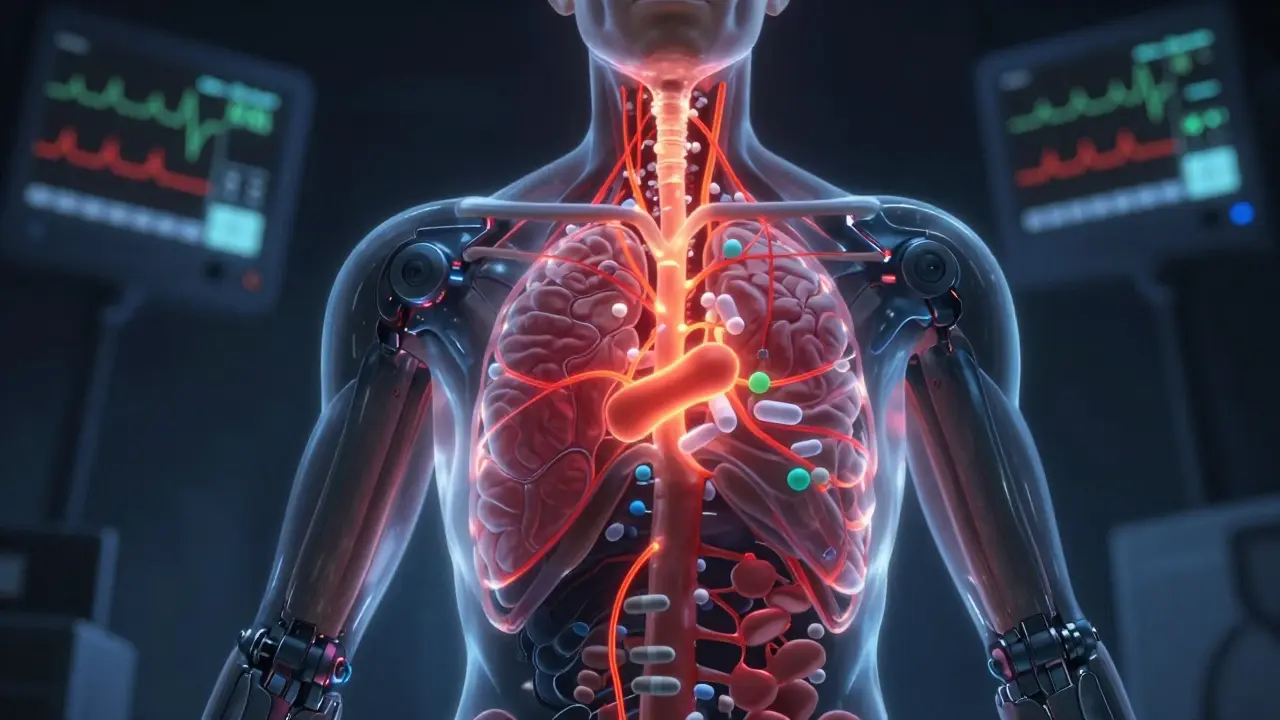
Opioid-Induced Adrenal Insufficiency Risk Calculator
Understand Your Risk
This calculator estimates your risk of developing opioid-induced adrenal insufficiency (OIAI) based on your opioid use duration and daily dose. Remember, this is for educational purposes only and should not replace professional medical advice.
Most people know opioids can cause constipation, drowsiness, or addiction. But few realize they can also shut down your body’s natural stress response - and that could kill you.
What Exactly Is Opioid-Induced Adrenal Insufficiency?
Opioid-induced adrenal insufficiency (OIAI) isn’t a myth. It’s a real, documented condition where long-term opioid use silently cripples your adrenal glands’ ability to make cortisol - the hormone your body needs to handle stress, infection, injury, or even a sudden drop in blood pressure.
Unlike Addison’s disease, where the adrenal glands themselves are damaged, OIAI is a communication breakdown. Opioids bind to receptors in your brain’s hypothalamus and pituitary gland, which normally signal the adrenals to release cortisol. When those signals get blocked, cortisol production drops - even though the glands are still physically fine.
This isn’t just theoretical. A 2023 study found that about 5% of people in the U.S. on long-term opioid therapy show signs of this condition. That’s not a tiny number - it’s tens of thousands of people walking around with a ticking time bomb inside them.
Why This Is So Dangerous
The real danger isn’t the low cortisol on a normal day. It’s what happens when something goes wrong - a car accident, surgery, pneumonia, or even a bad flu.
Your body needs a cortisol surge during stress. Without it, you can slip into an Addisonian crisis: dangerously low blood pressure, vomiting, confusion, coma, or death. And because the symptoms - fatigue, nausea, dizziness, low appetite - look just like the pain or depression you’re already being treated for, doctors often miss it.
One case study followed a 25-year-old man recovering from critical illness. He developed high calcium levels, which seemed odd. Only after digging deeper did doctors find his cortisol was nearly zero - caused by methadone. Once they stopped the opioid and gave him replacement steroids, his calcium levels normalized and he recovered fully.
That’s the pattern: OIAI hides in plain sight. It doesn’t scream. It whispers. And by the time it shouts, it’s often too late.
Who’s at Risk?
You don’t need to be on heroin or high-dose painkillers to be at risk. Even prescribed opioids can do this - especially if you’ve been taking them for more than 90 days.
Research shows the risk climbs sharply above 20 morphine milligram equivalents (MME) per day. That’s about:
- 10 mg of oxycodone twice daily
- 20 mg of hydrocodone twice daily
- 40 mg of morphine daily
A 2020 study of 162 long-term opioid users found 5% had confirmed adrenal insufficiency. But when they looked at people taking over 100 MME daily, the rate jumped to 22.5%. That’s more than 1 in 5.
It doesn’t matter if you’re taking it for cancer pain, back pain, or chronic pancreatitis. The mechanism is the same. Opioids don’t care why you’re taking them - they suppress your HPA axis regardless.
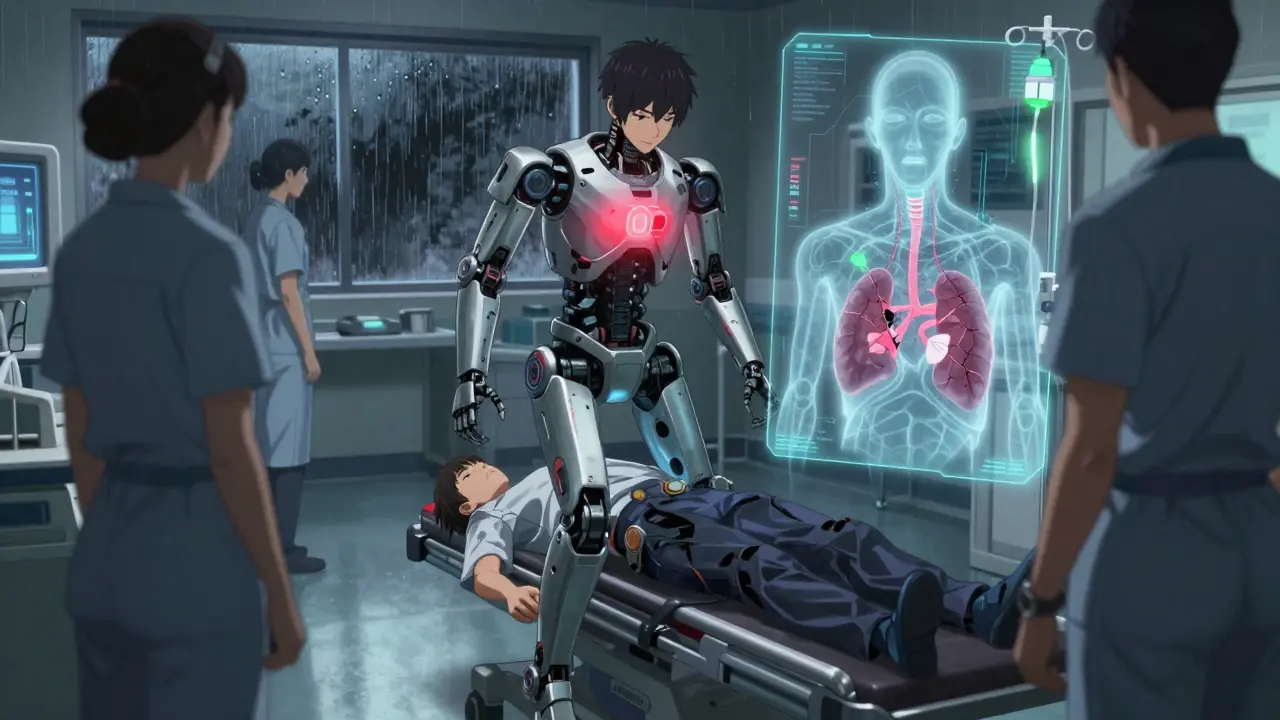
How Is It Diagnosed?
There’s no simple blood test you can order on your own. Diagnosis requires a special stimulation test - usually an ACTH stimulation test.
Here’s how it works:
- You get a baseline morning cortisol level. If it’s below 3 mcg/dL (100 nmol/L), that’s a red flag.
- You get an injection of synthetic ACTH.
- Your cortisol is measured again after 30 or 60 minutes.
- If your peak cortisol stays below 18 mcg/dL (500 nmol/L), you have adrenal insufficiency.
Some newer studies suggest even lower thresholds might be needed - especially if you’ve been on opioids for years. But right now, this is the gold standard.
Here’s the catch: most doctors don’t order this test unless they’re already suspicious. And most patients don’t know to ask. That’s why so many cases go undiagnosed until a crisis hits.
What Happens If You Stop Opioids?
The good news? OIAI is usually reversible.
In the 2015 case report, the 25-year-old man’s cortisol levels returned to normal within months after stopping methadone. Other studies show similar results - once the opioid is tapered or stopped, the HPA axis slowly wakes up.
But here’s the catch: you can’t just quit cold turkey. Abruptly stopping opioids while your adrenals are suppressed can trigger a crisis. That’s why tapering under medical supervision is critical.
Doctors may need to give you replacement glucocorticoids (like hydrocortisone) during the taper - not because you’re addicted, but because your body can’t make its own stress hormone yet. Think of it like training wheels for your adrenal glands.
And yes - cortisol has a 90-minute half-life. That means if you’re on replacement therapy, you need to take it multiple times a day to mimic natural rhythms. Skipping a dose during illness can be dangerous.
What About Aldosterone?
One thing that’s different with OIAI: your body still makes aldosterone.
That’s important. Aldosterone controls salt and potassium balance. In classic Addison’s disease, both cortisol and aldosterone crash, leading to dangerous electrolyte shifts. But with opioid-induced insufficiency, your salt levels usually stay normal.
This means you won’t see the classic signs like low sodium or high potassium - which is why some doctors dismiss it as “just fatigue.” But low cortisol alone is enough to cause life-threatening problems under stress.
Why Isn’t This More Widely Known?
Because it’s been hiding in plain sight for decades.
Studies from the 1970s already showed opioids suppress cortisol. But it wasn’t until the opioid epidemic exploded that clinicians started asking: “Could this be killing people in ways we don’t realize?”
Now, experts are sounding the alarm. A 2024 review in Frontiers in Endocrinology called it an “underappreciated endocrinopathy.” Another study in the Journal of Clinical Endocrinology & Metabolism reviewed 27 papers and confirmed the link across thousands of patients.
Yet most pain clinics don’t screen for it. Most endocrinologists don’t get called in until someone’s in the ER with low blood pressure. And most patients? They’ve never heard the term.
This isn’t about blaming doctors. It’s about a gap in education. We teach about opioid addiction. We teach about respiratory depression. But we rarely teach about adrenal suppression - even though it’s just as deadly.
What Should You Do?
If you’re on chronic opioid therapy - especially over 20 MME daily - and you’ve had unexplained fatigue, dizziness, nausea, or weight loss, ask your doctor about OIAI.
Don’t wait for a crisis. Don’t assume it’s “just pain.”
Here’s what to say:
- “I’ve been on opioids for over 6 months. Could this be affecting my adrenal glands?”
- “I’ve been feeling unusually tired, even when I rest. Could it be low cortisol?”
- “If I get sick or need surgery, could I be at risk for an adrenal crisis?”
If your doctor says no, ask for a referral to an endocrinologist. This isn’t a guess. It’s a testable condition with a clear protocol.
If you’re a clinician: if someone’s on high-dose opioids and has vague symptoms - test them. Don’t assume it’s depression. Don’t assume it’s chronic pain. Check the cortisol. It could save their life.
The Bigger Picture
Opioids have saved lives - but they’ve also created hidden dangers we’re only now beginning to see.
OIAI is rare. But it’s serious. And it’s preventable.
We’ve spent years fighting opioid overdoses. Now we need to fight the silent ones - the ones that don’t show up on an ambulance call, but show up in an ICU with no pulse.
The solution isn’t to stop opioids. It’s to know when they’re dangerous - and how to protect people who need them.
8 Comments
Selina Warren
Okay, so let me get this straight - we’re giving people opioids for back pain and not even checking if their body can handle a goddamn emergency? This isn’t medicine, it’s Russian roulette with a prescription pad. I’ve seen people on long-term opioids crash after a simple flu because no one thought to test cortisol. It’s criminal. We need mandatory screening at 90 days. No more ‘it’s probably just fatigue.’ If your meds can kill you quietly, you damn well better be monitored.
Eric Gebeke
People just don’t understand how fragile the HPA axis is. You think your body can just ‘bounce back’? That’s the myth. Opioids don’t just dull pain - they rewire your entire stress response system. And now we’re surprised when people die from a stubbed toe? This isn’t rare. It’s inevitable. The system is broken. We reward dependency, not healing. You want to fix this? Stop prescribing opioids like candy and start treating pain with real medicine - physical therapy, nutrition, mental health. But no, we’d rather keep the profit flowing.
Ryan Otto
Let us not ignore the broader geopolitical context. The opioid epidemic was engineered to sustain pharmaceutical monopolies while diverting attention from systemic healthcare failures. The suppression of cortisol is not an accident - it is a feature. The pharmaceutical-industrial complex benefits from chronic, non-resolving conditions. Cortisol suppression ensures lifelong dependency. The 5% statistic? Likely underreported. The real figure is hidden behind placebo-controlled trials and FDA loopholes. This is not medicine. It is biochemical control.
Praseetha Pn
OMG I knew this was happening. My cousin was on oxycodone for 3 years after a car crash and she started blacking out during stress - doctors called it ‘anxiety.’ Then she got pneumonia and nearly died. They didn’t find the cortisol thing until her heart was fluttering like a trapped bird. She’s on hydrocortisone now and it’s like she’s a different person - not zombie-mode, not ‘just tired,’ but ALIVE. Why isn’t this on every damn opioid prescription label? Why isn’t every pharmacist required to hand out a pamphlet? This is a goddamn public health emergency and no one’s screaming.
Robert Cassidy
They want you to think this is about ‘pain management.’ But what they really want is a docile, compliant population. If your body can’t handle stress, you won’t protest. You won’t march. You won’t organize. You’ll just lie there, numb, waiting for your next pill. This isn’t medical science - it’s social engineering. They don’t care if you live. They care if you’re quiet. Cortisol is the hormone of resistance. Suppress it, and you suppress revolution. The system is designed to keep you broken. And you’re still thanking them for the prescription.
Tyler Myers
Wait - so if I’m on 40mg of morphine daily and I get hit by a bus, I could die because my body can’t respond? And no one told me? That’s insane. My doctor just said ‘take it as needed.’ No warning. No follow-up. I’m 32. I don’t want to be a statistic because some pharma rep convinced my GP that opioids are ‘safe.’ This needs to be a black box warning. Like, ‘WARNING: MAY CAUSE YOUR BODY TO STOP WORKING WHEN YOU NEED IT MOST.’
Stacey Marsengill
I’ve been there. I was on high-dose opioids for endometriosis. I lost 30 pounds. Couldn’t get out of bed. Thought I was depressed. My therapist said I needed to ‘try harder.’ Then I collapsed during a family dinner. Turned out my cortisol was lower than a smoker’s lung. They put me on steroids. I cried for three days because I realized - I wasn’t weak. I was poisoned. And no one saw it. No one cared. I’m still angry. And I’m still taking hydrocortisone. Because my body doesn’t trust itself anymore.
Aysha Siera
They’re not testing because they don’t want to know. The system doesn’t want to admit opioids are this dangerous. They’d rather you die quietly than admit they got it wrong. I’m not surprised. They did the same thing with cigarettes. Same thing with opioids. Same thing with everything. Just keep taking the pill. Don’t ask questions. Don’t look too close. The truth is too expensive to fix.