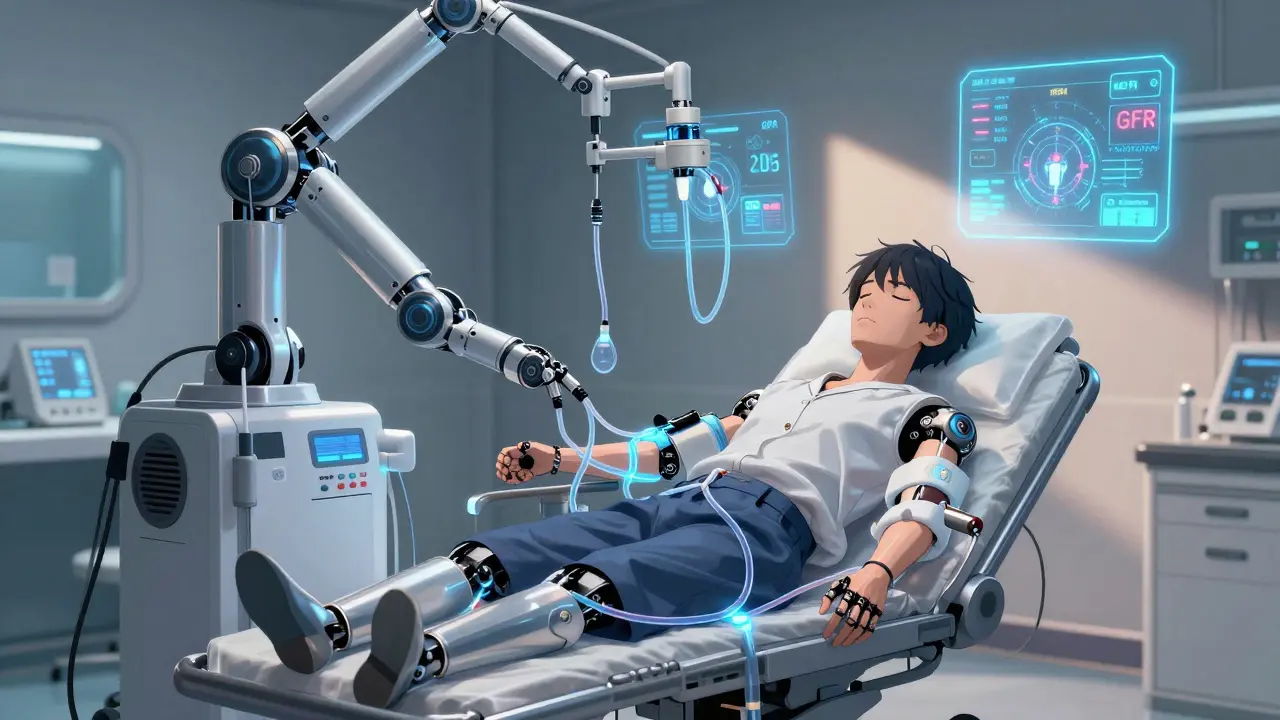
When your kidneys stop working, your body can't filter waste or balance fluids anymore. That’s end-stage renal disease (ESRD) - the point where kidneys have lost about 90% of their function. Without treatment, this isn’t just uncomfortable; it’s deadly. But here’s the truth most people don’t talk about: dialysis isn’t the only answer, and kidney transplant isn’t just a last resort - for many, it’s the best shot at living a full life again.
What Exactly Is End-Stage Renal Disease?
ESRD isn’t just "bad kidney function." It’s the final stage of chronic kidney disease, defined by a glomerular filtration rate (GFR) below 15 mL/min/1.73 m². That means your kidneys are barely working. The most common causes? Diabetes and high blood pressure. Together, they account for more than 70% of new ESRD cases. Other causes include polycystic kidney disease, lupus, and long-term drug damage. If you’re not on dialysis or waiting for a transplant, your body starts drowning in its own toxins. Fluid builds up. Your bones weaken. Your blood pressure goes haywire. Your heart strains. This isn’t something you can out-walk or out-eat. It’s a medical emergency that demands intervention.Dialysis: The Lifeline With a Heavy Cost
Most people with ESRD start with dialysis. There are two main types: hemodialysis and peritoneal dialysis. Hemodialysis pulls blood out of your body, cleans it through a machine, and puts it back. You typically do this three times a week, for three to four hours each time. That’s 12 to 16 hours a week just sitting in a chair - not counting travel time. Many patients describe it as exhausting. Your veins need to be ready, so an arteriovenous fistula (a direct connection between an artery and vein) is usually created months before dialysis starts. If you wait too long, your veins won’t be strong enough, and you’ll need a catheter - which increases infection risk. Peritoneal dialysis happens at home. A fluid is pumped into your belly through a catheter. Your peritoneal membrane acts like a filter, pulling out waste. Then, after a few hours, you drain it out. You do this four times a day (CAPD) or overnight with a machine (APD). It’s more flexible, but it requires strict hygiene. One wrong move, and you get peritonitis - a serious belly infection. Both types demand strict lab targets: phosphate between 3.5 and 5.5 mg/dL, calcium under 9.5 mg/dL, and PTH levels controlled with vitamin D analogs. Miss a dose of your phosphate binder? Your bones soften. Skip a dialysis session? Fluid backs up into your lungs. The cost? Medicare spends about $35 billion a year on ESRD care - 7.2% of its entire budget - for just 1% of its enrollees. That’s not sustainable.Kidney Transplant: The Gold Standard
Here’s where things change. Kidney transplant isn’t just another option - it’s the treatment with the best survival rates, the fewest restrictions, and the highest quality of life. Studies show transplant recipients have a 68% lower risk of death than those on dialysis. Five-year survival? 83% for transplant patients versus 35% for dialysis patients. That’s not a small difference. That’s life versus a slow decline. Transplant recipients also get back their freedom. No more dialysis schedules. No more fluid limits. No more rigid low-potassium, low-phosphorus diets. You can eat an orange. Drink a soda. Travel. Work full-time. The average transplant patient has 50% fewer hospital visits each year than someone on dialysis. One 2021 study found transplant patients scored 28.7 points higher on a quality-of-life survey than hemodialysis patients - on a scale where 100 is perfect. That’s like going from feeling constantly drained to feeling like yourself again. Living donor transplants are even better. One-year graft survival? 95.5%. Five-year survival? 86%. Deceased donor transplants are still strong - 93.7% and 78.5% respectively. The catch? You need a donor. And you need to be referred early. Guidelines say to get evaluated when your GFR drops below 30 mL/min - years before you’d need dialysis. But only 5% of people who start dialysis were ever referred for transplant evaluation. That’s not a medical failure. It’s a system failure.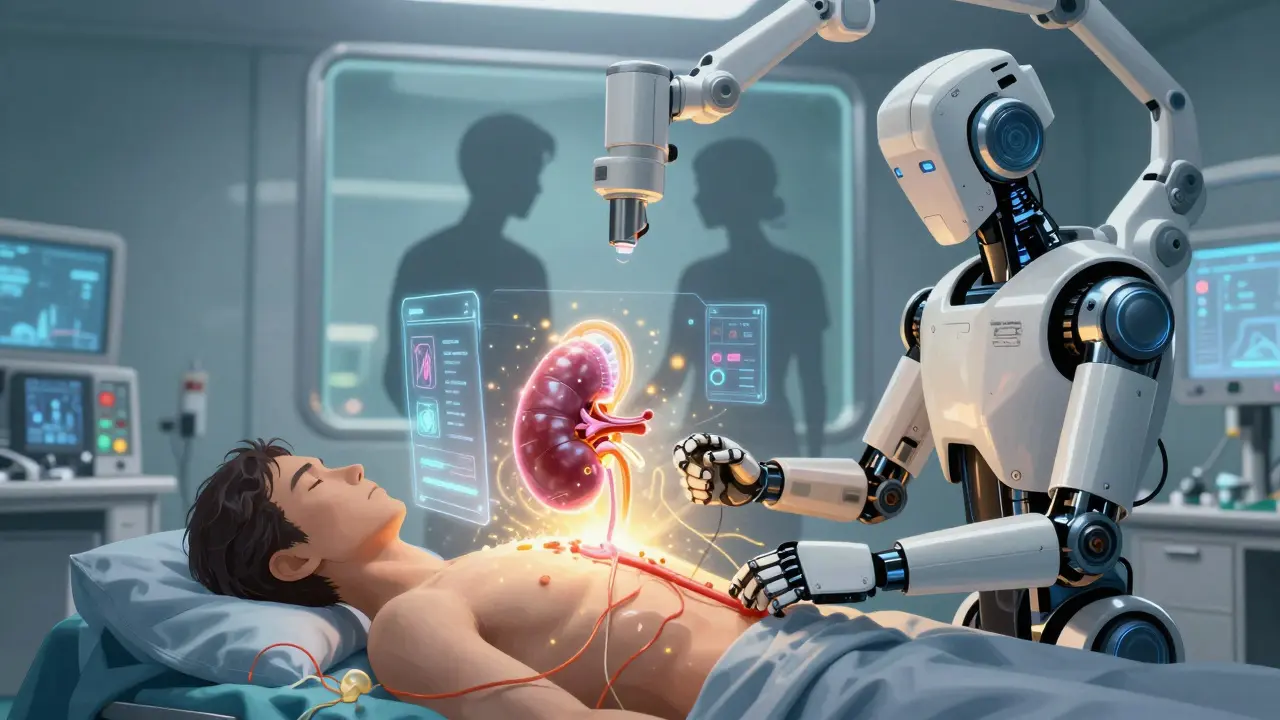
Why Aren’t More People Getting Transplants?
The waiting list in the U.S. is over 90,000 people. Each year, only about 27,000 transplants happen. That means you could wait four years - or longer. And not everyone qualifies. Contraindications include severe heart disease, active cancer in the last five years, dementia, or uncontrolled substance use. Age alone isn’t a barrier - many people over 70 do well - but combined with other health problems, it becomes risky. Then there’s access. The RaDIANT Community Study found African American patients were far less likely to be referred for transplant, even when their medical needs were identical. After targeted education for doctors and patients, referrals among Black patients jumped 40%. That’s not about biology. It’s about bias, communication, and system gaps. Medicare started tracking transplant referrals in 2012, and newer payment models like the Kidney Care Choices Model now reward providers for early referrals. But change is slow.What Does Life Look Like After a Transplant?
You’re not cured. You’re on immunosuppressants for life. That means drugs like tacrolimus, mycophenolate, and steroids. These cost $1,500 to $2,500 a month. They make you more vulnerable to infections, skin cancers, and diabetes. You’ll need regular blood tests. You’ll have to watch for signs of rejection - fever, swelling, reduced urine output. But compared to dialysis? It’s a trade-off worth making. Most people return to work within three to six months. Many resume hobbies, travel, even have children. One study showed transplant patients reported higher energy levels, better sleep, and less anxiety than those on dialysis. The freedom to live - not just survive - is real.
What About Home Dialysis?
Home hemodialysis is growing fast. In 2015, only 8.3% of new dialysis patients chose it. By 2022, that number jumped to 14.2%. Why? Because it’s more flexible. You can do it at night while you sleep. You can do it five or six times a week - which gives better outcomes than three times. It’s not for everyone. You need space, training, and support. But for those who can manage it, it’s a powerful middle ground between transplant and in-center dialysis.Is There Hope on the Horizon?
Yes. The 21st Century Cures Act has expanded the donor pool by allowing organs from older or higher-risk donors - increasing transplants by 15% since 2017. Living donor transplants are up 18% since 2018. The NIH is investing $157 million through 2026 into the Kidney Precision Medicine Project, aiming to tailor treatments based on individual biology. And programs like MOTTEP are bringing education directly to communities that have been left behind. But the biggest barrier isn’t technology. It’s awareness. Too many people think dialysis is the only path. Too many doctors wait until the last minute to refer. Too many patients don’t know they can ask for a transplant evaluation before they even start dialysis.What Should You Do Now?
If you or someone you know has advanced kidney disease (GFR under 30):- Ask your nephrologist: "Can I be evaluated for a kidney transplant?"
- Ask if you can be referred to a transplant center - even if you’re not on dialysis yet.
- Ask about living donor options. A healthy family member or friend might be a match.
- Get your fistula placed early - don’t wait until you’re on dialysis.
- Know your numbers: GFR, phosphate, calcium, PTH. Track them. Ask questions.
Can you live a normal life after a kidney transplant?
Yes, most people return to work, travel, exercise, and enjoy hobbies within months of transplant. You’ll need to take daily immunosuppressants and attend regular checkups, but your daily life becomes far less restricted than with dialysis. Many report better sleep, energy, and mental health. Dietary freedom - like eating fruits, nuts, and dairy - returns quickly.
Why is dialysis not the best long-term solution?
Dialysis keeps you alive, but it doesn’t restore kidney function. It’s physically draining, time-consuming, and comes with strict diet and fluid limits. Long-term dialysis increases risk of heart disease, infections, and bone problems. Survival rates drop sharply after five years - only 35% of dialysis patients live that long. Transplant recipients have an 83% five-year survival rate. Dialysis is a bridge, not a destination.
How long do you wait for a kidney transplant?
The average wait is about four years, but it varies widely. If you have a living donor - a family member or friend - you can skip the waiting list entirely. Wait times are longer for people with rare blood types or high antibody levels. Some regions have longer lists than others. Early evaluation and being open to a kidney from a deceased donor can shorten your wait.
Can older adults get a kidney transplant?
Age alone doesn’t disqualify you. Many transplant centers evaluate patients over 70 if they’re otherwise healthy. The key factors are heart function, mobility, cognitive status, and absence of active cancer. Outcomes for older recipients are good, especially with living donor kidneys. The decision is based on biological age, not calendar age.
What are the risks of kidney transplant?
The biggest risk is rejection - your immune system attacking the new kidney. That’s why you take lifelong immunosuppressants. These drugs increase your risk of infections, skin cancer, and diabetes. There’s also surgical risk: bleeding, blood clots, or complications from anesthesia. But for most patients, the long-term benefits outweigh these risks. Regular monitoring and medication adherence make complications rare.
Is home dialysis better than in-center dialysis?
For some, yes. Home dialysis - whether hemodialysis or peritoneal - gives more control over your schedule, fewer hospital visits, and often better health outcomes. Patients who do dialysis five or six times a week at home report fewer cramps, better blood pressure control, and more energy. But it requires training, space, and support. It’s not ideal for people without reliable help at home or those with other serious health issues.
Why are transplant referral rates so low among minorities?
Historically, Black and Hispanic patients were less likely to be referred due to provider bias, lack of education, language barriers, and mistrust in the system. Studies show that when healthcare teams actively educate patients and providers, referral rates increase dramatically. Programs like MOTTEP and CMS quality incentives are helping, but systemic change is still ongoing. Patients should ask: "Am I being referred for transplant evaluation?" if they’re not sure.
How much does a kidney transplant cost?
The surgery itself can cost $300,000-$500,000. But Medicare covers most of it for ESRD patients. The bigger ongoing cost is immunosuppressant drugs - $1,500 to $2,500 a month. Medicare continues to cover these for three years after transplant. After that, you may need private insurance or Medicaid. Despite upfront costs, transplant saves money long-term - dialysis costs over $90,000 per patient per year, while transplant costs drop to under $30,000 annually after the first year.
12 Comments
Bhaskar Anand
Transplant is a luxury for the rich. In India, we don't even have enough dialysis machines for everyone. You talk about freedom? I've seen men die in queues because their government couldn't afford a kidney. Stop romanticizing Western solutions. This isn't a TED Talk-it's a systemic failure.
William James
Man. I just read this after my mom’s second transplant. She’s 72. Still drives. Still bakes pies. Still argues with me about politics. Dialysis was killing her slowly. Transplant? It gave her back her Sundays. Yeah, the meds are a hassle. Yeah, we’re scared of rejection. But we’d do it again tomorrow. Life isn’t about avoiding risk-it’s about choosing the right one.
David McKie
Oh, wonderful. Another feel-good story where the system works perfectly for the lucky few. Let me guess-you’re one of those people who thinks immunosuppressants are just ‘a small price to pay.’ Meanwhile, I know a guy who got a kidney, then got skin cancer from the drugs, then lost his job because he couldn’t work full-time anymore. And now he’s on Medicaid, begging for a second transplant. This isn’t hope. It’s a trap wrapped in a white coat.
Gabrielle Conroy
I work in nephrology. Every single day, I see patients who think dialysis is their only option. I’ve had 80-year-olds cry because they didn’t know they could ask for a transplant evaluation. Please-ask. Ask early. Ask loudly. Your doctor might not bring it up, but that doesn’t mean you don’t deserve it. You’re not a burden. You’re a candidate. And you’re not alone.
Valerie Letourneau
It is imperative to note that the structural inequities in transplant access are not merely anecdotal; they are empirically documented. The RaDIANT Community Study, alongside subsequent analyses by the United Network for Organ Sharing, demonstrates a persistent disparity in referral patterns that correlates with socioeconomic and racial demographics. Addressing this requires institutional accountability, not individual advocacy alone.
Jacob Carthy
Dialysis is a joke. I know a dude who did it for 8 years. His legs swelled up like balloons. He couldn't sleep. His wife left. He got a transplant last year. Now he's coaching little league. Life after? It's not magic. It's just not hell.
Nick Hamby
There’s a quiet truth here that gets buried under statistics: Transplant isn’t just about survival-it’s about dignity. The ability to wake up without a needle in your arm. To drink water without calculating ounces. To hug your child without fearing you’ll collapse from fluid overload. These aren’t luxuries. They’re basic human rights. And yet, we treat them like bonuses. We must stop measuring care by cost and start measuring it by humanity.
kirti juneja
My aunt got a kidney from her cousin. No waiting. No bureaucracy. Just love. She started eating mangoes again. Mangoes! After 4 years of boiled rice and no salt, she cried over a bowl of fruit. Dialysis stole her joy. Transplant gave it back. Don’t let fear silence your hope. Talk to someone. Ask. Even if you’re scared. Even if you think you’re too late.
Haley Gumm
Let’s be real. The system is rigged. You think transplant is the gold standard? Try being poor. Try being Black. Try being uninsured. The stats look pretty on paper. In real life? You’re just another number waiting for a bureaucrat to notice you exist. And guess what? Most never do.
Spenser Bickett
Oh wow, so transplant is the magic solution? Let me guess-you’ve never had to take 8 pills a day, every single day, just to keep a stranger’s organ from turning into mush? And the cost? $2500/month? That’s not a trade-off. That’s a prison sentence with better scenery. I’m not saying don’t do it. I’m saying don’t pretend it’s a fairy tale.
Christopher Wiedenhaupt
It is noteworthy that the expansion of donor pools under the 21st Century Cures Act has demonstrably increased transplant accessibility. However, the persistence of regional disparities in referral rates suggests that technological progress alone is insufficient without concurrent educational and policy interventions at the local level.
John Smith
Dialysis is for people who don't want to fight. Transplant is for people who refuse to die quietly. The system doesn't care. But you? You can. Just don't wait until it's too late.