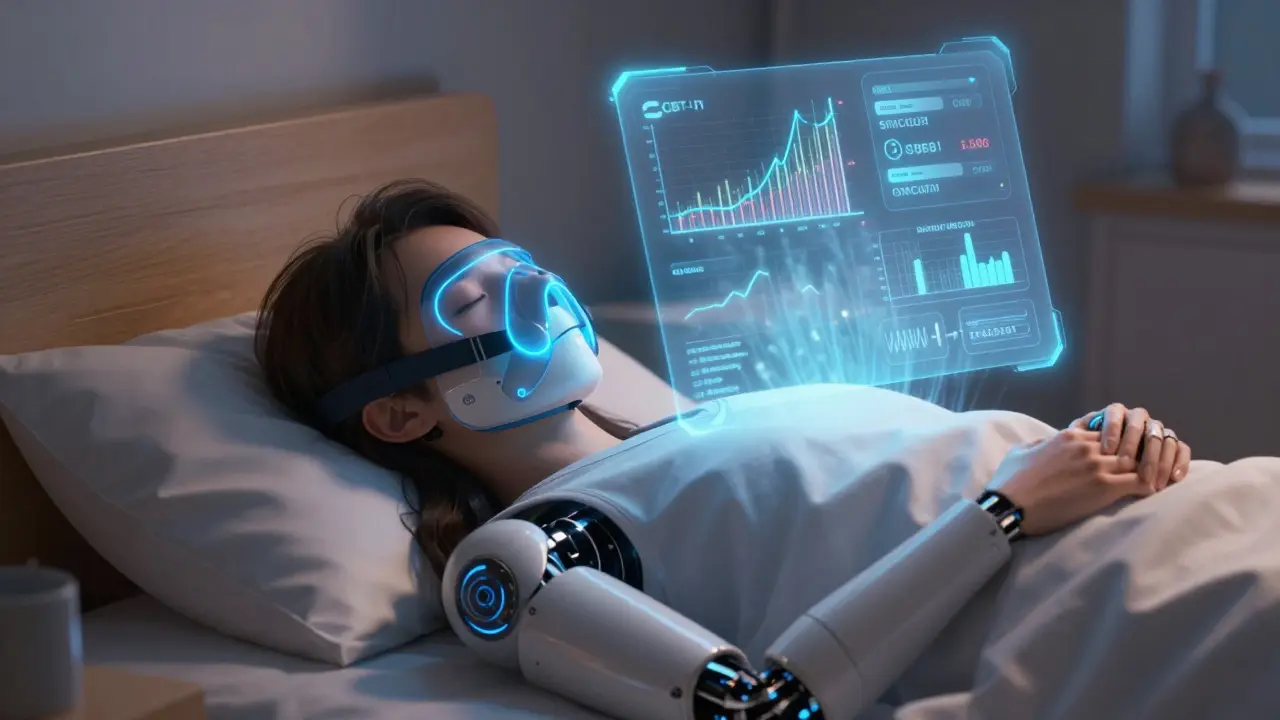
What Is COMISA, and Why Does It Matter?
COMISA stands for Comorbid Insomnia and Sleep Apnea. It’s not just having trouble sleeping and snoring at night-it’s when both conditions happen together, making each one worse. About 4 out of every 10 people diagnosed with sleep apnea also have clinical insomnia. That’s not rare. It’s common. And most doctors still treat them separately, which often doesn’t work.
Imagine this: You get a CPAP machine for your sleep apnea. It’s supposed to keep your airway open so you stop stopping breathing at night. But instead of sleeping better, you lie there frustrated, wide awake, thinking about the mask, the noise, the pressure. You can’t fall asleep. You wake up every hour. Your insomnia isn’t gone-it’s been made worse by the very device meant to help you.
This is COMISA in action. And it’s why standard treatment fails so often.
Why Treating One Condition Alone Doesn’t Work
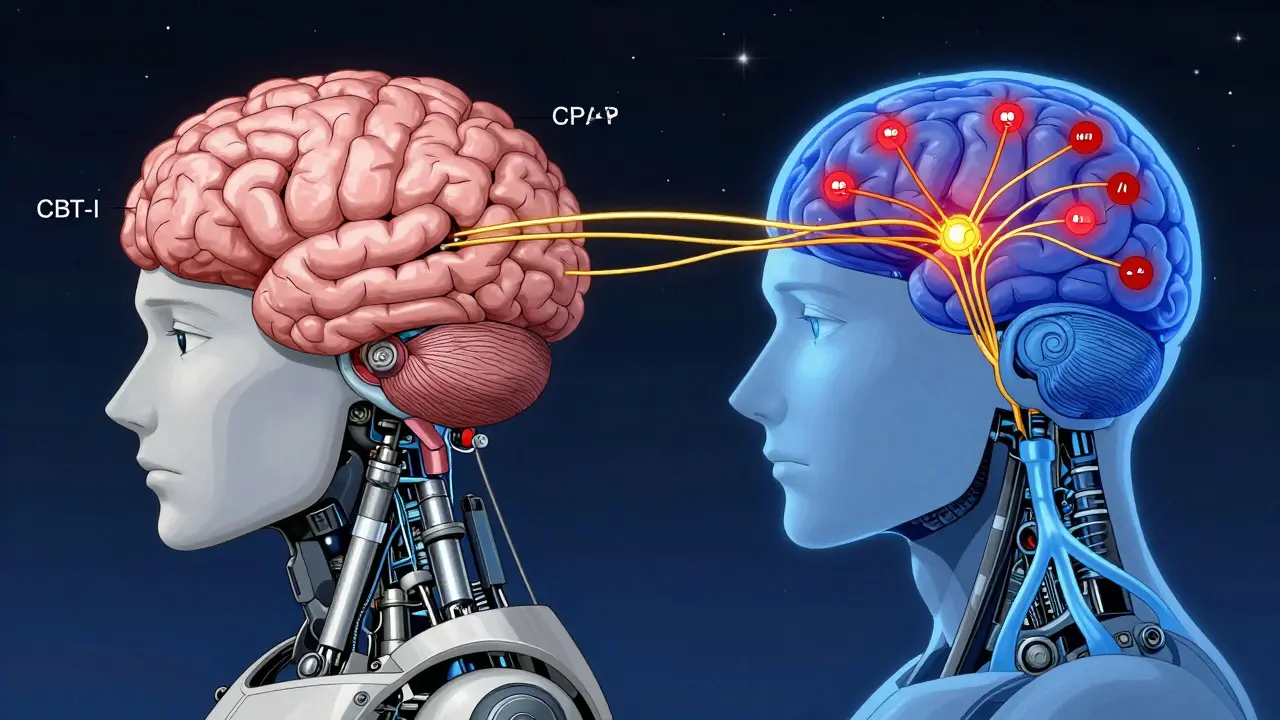
Doctors have long treated sleep apnea and insomnia like two separate problems. For sleep apnea, the go-to is CPAP. For insomnia, it’s CBT-I-Cognitive Behavioral Therapy for Insomnia. Both work well on their own. CPAP fixes breathing issues in 85-90% of cases when used properly. CBT-I helps 70-80% of people with insomnia sleep better without pills.
But when both are present, neither works as well. Studies show that 39% of people with sleep apnea still have insomnia even after using CPAP for months. And if you only do CBT-I without fixing the apnea, you’re still waking up 15, 20, even 40 times an hour because your airway collapses. Your brain never gets deep, restorative sleep.
Here’s the hard truth: Treating one first often makes the other worse. Starting with CPAP can cause new insomnia because of mask discomfort, air pressure, or anxiety about the machine. Starting with CBT-I might delay treating the life-threatening breathing events that raise your risk of heart attack and stroke.
The Only Proven Way to Treat COMISA
The research is clear: the best approach is to treat both conditions at the same time. Not one after the other. Not "see if CPAP fixes the insomnia." But CBT-I and CPAP together, from day one.
A 2020 randomized trial found that COMISA patients who got both treatments saw a 54% improvement in insomnia symptoms-and used their CPAP 1.2 extra hours per night compared to those who only got sleep education. That’s not a small gain. That’s life-changing.
CBT-I for COMISA isn’t the same as for regular insomnia. It’s adapted. It includes:
- Stimulus control: Only use the bed for sleep. If you can’t sleep after 20 minutes, get up. Don’t lie there stressing about the CPAP.
- Sleep restriction: Limit time in bed to match actual sleep time, then slowly increase it. This builds sleep pressure so you fall asleep faster.
- CPAP-specific behavioral coaching: Learning how to adjust the mask, use ramp mode, and manage discomfort without panic.
- Addressing sleep-related anxiety: Many COMISA patients fear the machine. Therapy helps reframe it as a tool, not a threat.
When both are done together, 63% of patients reach insomnia remission within 12 weeks. With CPAP alone? Only 29%.
What Does a COMISA Treatment Plan Look Like?
There’s no one-size-fits-all, but here’s what a real, evidence-based plan looks like:
- Diagnosis first. You need a sleep study (polysomnography) to confirm OSA (AHI ≥5) and a validated insomnia scale (Insomnia Severity Index, ISI ≥15). Many clinics skip the ISI. That’s a mistake. You can’t treat what you don’t measure.
- Start CPAP and CBT-I on the same day. Don’t wait. Don’t try CPAP for 3 months and then refer to therapy. Get both going together. A trained sleep coach can help you adjust the mask, set the ramp pressure, and teach you CBT-I techniques in the same session.
- Use adaptive CPAP. New machines like ResMed’s AirSense 11 adjust pressure based on your breathing patterns during sleep. This reduces awakenings caused by sudden pressure changes.
- Track progress with tools. Use apps or logs to record CPAP usage, sleep onset time, and nighttime awakenings. This isn’t just for your doctor-it helps you see what’s working.
- Address mental health. Anxiety and depression are common in COMISA. If you’re struggling, you need support. CBT-I works best when anxiety is managed. One study showed only 45% of COMISA patients with high anxiety improved with CBT-I-versus 78% without it.
What About Digital CBT-I and Other Options?
There are apps like Sleepio and Somryst that offer digital CBT-I. They’re convenient. But they’re not for everyone. A 2023 study found they work well for mild COMISA (AHI 5-15), helping 65% of patients. But for moderate to severe OSA (AHI >15), success drops to 38%. Why? Because the breathing events are too disruptive. Digital tools can’t adjust to physical airway collapse the way a live coach can.
Other treatments exist, but they’re not first-line:
- Orexin antagonists like suvorexant (approved for COMISA in December 2023) help with sleep maintenance. In trials, they improved sleep by 42-57% when paired with CPAP.
- Mandibular advancement devices can help mild OSA, but they don’t fix insomnia.
- Neurostimulation (like hypoglossal nerve stimulation) is for severe OSA patients who can’t tolerate CPAP-but it doesn’t touch insomnia.
None of these have the same level of evidence as combined CBT-I and CPAP. And they’re often more expensive or harder to access.
The Real Barriers to Getting Help
Even though the science is solid, most people with COMISA never get proper care. Why?
- Doctors don’t screen for both. Primary care providers see insomnia and treat with sleep aids. Or they see snoring and send you for CPAP. Few ask, "Do you have trouble falling asleep even after using the machine?"
- Wait times are long. In the U.S., finding a psychologist trained in CBT-I for COMISA can take 14 weeks on average. Rural areas have one specialist for every 100,000 people.
- Insurance doesn’t always cover it. CBT-I sessions cost $125-$185 each. CPAP machines run $800-$3,000. Only 12% of patients have access to integrated programs.
- Coordination is broken. Sleep labs and behavioral therapists rarely talk to each other. Only 28% of U.S. sleep centers have formal referral pathways.
But things are changing. CMS introduced new billing codes (G2212-G2214) in January 2024 to reimburse integrated COMISA care. UnitedHealthcare found $1,843 less in annual healthcare costs per patient when they got proper treatment. That’s saving money-and lives.

What You Can Do Right Now
If you think you have COMISA, here’s what to do:
- Ask your doctor for a sleep study. Don’t accept a diagnosis of just insomnia or just sleep apnea. Push for both to be checked.
- Ask if CBT-I is available with your CPAP. Say: "I’ve been told to use CPAP, but I still can’t fall asleep. Is there a program that combines both?"
- Look for integrated sleep clinics. Mayo Clinic, Stanford, and Flinders University have dedicated COMISA programs. Some private practices now offer telehealth CBT-I paired with CPAP coaching.
- Track your symptoms. Use a simple journal: When did you fall asleep? How many times did you wake up? Did you use your CPAP? How long? This helps your provider adjust your plan.
- Don’t give up. If one approach fails, try another. COMISA is hard, but it’s treatable. You’re not broken. You just need the right plan.
What’s Next for COMISA Treatment?
The future is promising. Researchers at Flinders University are running the COMBINE trial-comparing sequential vs. concurrent treatment. Results are due in mid-2024. New AI tools are being developed to predict who will respond best to CBT-I based on sleep patterns, anxiety levels, and CPAP usage data. One model is already 78% accurate.
Home diagnostic devices that test for both insomnia and apnea in one night are coming. Insurance companies are starting to pay for integrated care because it reduces ER visits, hospitalizations, and depression-related costs.
But the biggest change? Doctors are finally listening. In 2018, only 42% of sleep medicine fellows thought COMISA was essential to know. By 2023, that jumped to 78%. The tide is turning.
Final Thought: COMISA Is Real. And It’s Treatable.
You’re not alone. Millions of people struggle with this exact mix of problems. The good news? You don’t have to live with sleepless nights and gasping for air. The solution isn’t a miracle drug or a magic mask. It’s two proven therapies working together-CBT-I and CPAP-delivered in the right way.
It takes time. It takes effort. But the results? Better sleep. More energy. Lower risk of heart disease. And finally, peace at night.
Is COMISA the same as having insomnia and sleep apnea separately?
No. COMISA is when both conditions are present and interact in a way that makes each worse. Treating them separately often fails because the treatments can interfere with each other. For example, CPAP can trigger new insomnia symptoms, and untreated sleep apnea makes CBT-I less effective. COMISA requires a combined approach.
Can I just use CPAP and hope my insomnia goes away?
No. Studies show 39% of people with sleep apnea still have insomnia even after using CPAP regularly. CPAP fixes breathing, but not the mental and behavioral patterns keeping you awake. Without CBT-I, you’re likely to struggle with mask discomfort, nighttime awakenings, and anxiety about sleep.
How long does COMISA treatment take to work?
Most people see improvements in insomnia within 4-6 weeks of starting combined CBT-I and CPAP. CPAP adherence improves within the same timeframe. Full remission of insomnia symptoms typically happens by 12 weeks. It’s not instant, but the progress is steady and lasting.
Are digital CBT-I apps enough for COMISA?
For mild COMISA (AHI 5-15), digital CBT-I apps like Sleepio can help 65% of users. But for moderate to severe sleep apnea (AHI >15), success drops to 38%. The physical disruptions from apnea events are too strong for apps alone to overcome. Live coaching with a trained provider is more effective for severe cases.
What if I can’t afford CBT-I or CPAP?
Many insurance plans now cover CBT-I and CPAP under new CMS billing codes (G2212-G2214) introduced in January 2024. If you’re uninsured, ask about sliding-scale clinics, university sleep centers, or telehealth programs. Some nonprofits offer CPAP donations. Don’t let cost stop you-there are options, and untreated COMISA costs more in the long run through health complications.
Can COMISA be cured?
"Cured" isn’t the right word. COMISA is a chronic condition, but it’s highly manageable. With combined treatment, 63% of patients achieve remission of insomnia symptoms, and CPAP adherence improves dramatically. Most people maintain better sleep for years after treatment. It’s not a one-time fix, but a sustainable lifestyle change.
14 Comments
Dan Gaytan
Finally, someone put this into words I can actually use. I’ve been on CPAP for 18 months and still felt like I was fighting sleep every night. Started CBT-I last month with my sleep coach-and holy crap, I’m sleeping through the night. No more 3 a.m. panic about the mask. It’s not magic. It’s just… working together. Thank you for this.
Andrea Di Candia
This is the most balanced, human take on COMISA I’ve ever read. So many people treat sleep like a broken lightbulb-just swap the part. But your mind and body are a system. You can’t fix one wire without checking the whole circuit. I’ve seen patients break down crying because they thought they were failing when really, the system was never designed to help them. This isn’t just medicine-it’s dignity.
Chris Buchanan
Let me guess-you’re one of those people who thinks the FDA is in cahoots with ResMed? 😏 Look, I get it. CPAP feels like a medieval torture device. But the fact that 63% of people hit remission with combined treatment? That’s not marketing. That’s math. And if you’re still blaming the machine instead of the system… maybe your insomnia isn’t just in your sleep-it’s in your denial.
Diana Alime
ok so i got my cpap 2 years ago and still wake up 10x a night and my dr just says 'u need to use it more' like its my fault?? i swear if i had a dollar for every time someone told me to 'just relax'... i could buy a whole new mattress. this post is the first thing that actually made sense. thank u??
Usha Sundar
My husband has this. He refused CBT-I for 3 years. Said it was ‘therapy nonsense.’ Then last month, he broke down sobbing at 2 a.m. because he couldn’t fall asleep again. He started both treatments last week. First night he slept 5 hours straight. I cried. I’m not even the patient. Just the witness.
claire davies
As someone who grew up in a household where ‘sleep problems’ were dismissed as ‘not trying hard enough,’ this hits deep. In the UK, we’ve got this weird cultural thing where exhaustion is a badge of honor. But COMISA? That’s not hustle culture-that’s your body screaming for help. I’ve sent this to three friends already. One’s booked a sleep study tomorrow. Another just cried reading it. We need more of this. Not more pills. More understanding.
Joe Jeter
Let’s be real-this whole COMISA thing is just Big Sleep’s way to sell more CPAPs and therapy sessions. CBT-I? Sounds like a fancy word for ‘think positive.’ And who’s funding these ‘studies’? The same companies that make the machines. Wake up. Sleep is simple: stop scrolling, stop caffeine, go to bed. If you’re still awake, maybe you’re just lazy.
Jeffrey Frye
Interesting. But where’s the data on long-term adherence? You cite a 12-week study, but what about year two? CPAP compliance drops to 30% after 18 months. And CBT-I? Most people drop out after session 3. You’re presenting this like a silver bullet, but the real world is messier. The 63% remission rate? That’s probably inflated by people who stuck with it long enough to get results-and we don’t hear from the other 37%. The real story is the dropout rate. Not the success.
Bhargav Patel
One must consider the metaphysical dimension of sleep disturbance: the Cartesian divide between mind and body, fractured by modernity’s relentless demands. COMISA is not merely a clinical entity-it is the somatic manifestation of a civilization that has forgotten how to rest. To treat it with machines and behavioral protocols is to apply Band-Aids to a soul in exile. True healing requires not just the regulation of airways and cognitive patterns, but the reclamation of stillness as sacred. The CPAP is a tool; CBT-I, a discipline. But neither can substitute for the quietude of the soul, which modern medicine has rendered obsolete.
siddharth tiwari
u know what they dont tell u? cpap is a mind control device. the government uses the pressure waves to track ur brainwaves and feed u false dreams. cbt-i? that’s just them programming u to accept it. they dont want u to sleep well-they want u to be docile. check the patent filings. look at the numbers. why do u think the sleep labs are all owned by the same 3 corps? its all connected. wake up.
bharath vinay
CBT-I is just a placebo wrapped in jargon. I tried it. Didn’t work. CPAP made me feel like I was being suffocated by a robot. So I stopped both. Now I sleep on my side with a pillow under my neck. Better than all this nonsense. People need to stop trusting doctors and start trusting their bodies.
niharika hardikar
While the empirical data presented is methodologically sound, one must interrogate the epistemological framework underpinning the conflation of physiological and psychological interventions. The ontological distinction between obstructive sleep apnea (a biomechanical disorder) and insomnia (a neurobehavioral phenotype) remains unaddressed in the proposed paradigm. To conflate treatment modalities risks therapeutic homogenization, thereby undermining the specificity required for evidence-based clinical practice. A more nuanced, stratified approach is warranted.
Abby Polhill
As a sleep tech who’s seen 800+ patients, I can confirm: the combo works. But here’s what no one says-most patients get overwhelmed by the dual load. You’re learning mask fitting, ramp settings, sleep restriction, stimulus control, AND managing anxiety. It’s a full-time job. The real breakthrough isn’t the protocol-it’s the care team. If you’ve got a sleep coach who’s actually in the trenches with you? That’s the secret sauce. Otherwise, you’re just another chart in the system.
Chris Buchanan
And here’s the kicker-your insurance won’t cover the sleep coach. But they’ll cover the $3,000 machine. So you get the hardware, but not the human who actually helps you use it. That’s not healthcare. That’s retail with a stethoscope. Fix the system, not just the mask.